|
|
Oct 21, 2022
Pre-arbitral discovery in Singapore was generally disallowed by the courts. However, with the advent of the new Rules of Court in Singapore taking effect as of 1 April 2022, it seems appropriate to review Singapore’s position on pre-arbitral discovery and whether it might be allowed under the new Rules of Court.
The Two-Pillar Solution acknowledges the importance of the STTR in achieving a consensus on Pillar II for developing countries, but so far has only identified interest, royalties and a “defined set of other payments” as being subject to the rule, has set the minimum rate for the STTR at a range from 7.5% to 9% and has relegated implementation to a bilateral negotiation upon request. This panel will explore the practical tension inherent in the Pillar II proposals in addressing the concerns of developed and developing countries with a particular emphasis on the challenges faced by developing countries in protecting their tax base and competing for revenue.
IBA Annual Conference Miami 2022
The Committee aims to gather global information on barriers to justice and solutions, focusing on statutory schemes like legal aid. Findings will be shared through reports and events, with all information available on the website for those unable to attend. Acting as a central hub within the IBA, the Committee will coordinate efforts on access to justice and legal aid, collaborating with other committees on joint projects. The IBA’s global reach will support the exchange of best practices, offering valuable insights for jurisdictions facing challenges in maintaining or improving access to justice during times of austerity.
In the past few months, the Commission has adopted an unprecedented number of decisions allowing Member States to grant State aid to economic sectors and undertakings in financial difficulty due to the Covid-19 outbreak. The majority of the measures were adopted under a Temporary Framework (Article 107(3)(b) TFEU), which set out a toolbox of measures available to Member States. By contrast, Member States have been reluctant to make use of other available instruments
The Pro Bono Committee promotes pro bono legal services globally, through the IBA Pro Bono Declaration, the exchange of information and initiatives, and by promoting best practices.
Pro bono work supports access to justice where this right is not fully supported by legal aid. The Committee provides resources, including digital content and articles highlighting pro bono efforts by legal professionals, which can be found below.
The Committee is committed to advancing pro bono work across the profession and welcomes new members passionate about contributing to this mission.
May 22, 2025
Significant cuts to US foreign aid will have far-reaching repercussions. Global Insight assesses the consequences and the future of the aid sector.
In the current volatile geopolitical landscape, the approach to tariffs, state aid and foreign direct investment regimes needs to be carefully managed in order to avoid protectionism, which may have significant unintended consequences for competition in African markets, particularly as we move to implement the African Continental Free Trade Agreement.
2nd IBA African Competition Law Conference
The SPPI Showcase Session at the IBA Annual Conference in Seoul launched a report by the IBA Access to Justice and Legal Aid Committee and the World Bank which examines the economic benefits of legal aid programmes around the world. Legal aid is not only a fundamental principle of a fair society but also astute economics, as it saves considerable government expenditure in various areas.
IBA Annual Conference Paris 2023
IBA Annual Conference Mexico City 2024
Feb 03, 2025
2024 was the deadliest year on record for humanitarian personnel
An open committee business meeting where all members and Officers are invited to learn more about the current and upcoming activities and developments of the Committee.
IBA Annual Conference Toronto 2025
Mar 08, 2017
Podcast - President Trump proposes devastating cuts to US civil legal aid
In his first draft budget since taking office, US President Donald Trump plans to scrap funding for civil legal aid. The Legal Services Corporation (LSC) would see its current funding of $375m cut to zero.
The role of the courts in arbitration: an Asia Pacific perspective
Apr 29, 2025
The third and final annual phase of the China-aided Cambodia landmine elimination project began in March
Through some of their stories, barriers and challenges accessing Legal Aid, will become transparent. It is known that 80% of people displaced by climate change are women [Gender, climate change and food security, issue brief, 2016 UNDP].
IBA Annual Conference Miami 2022
Oct 31, 2024
The International Bar Association’s Human Rights Institute (IBAHRI), condemns the passing of legislation in the Israeli parliament to ban the United Nations Relief and Works Agency for Palestine Refugees in the Near East (UNRWA) from operating in Israel, revoking its privileges and immunities…
This session focuses on the role that alternative dispute resolution can play in improving access to justice. We know that people at social and economic disadvantage are also at disadvantage when it comes to accessing and exercising their legal rights. Often a distinct power imbalance exists which traditional methods of resolving disputes may not overcome. So how do we ensure that those people in economic hardship or with a physical or mental disability who cannot advocate as effectively as those with more means, can be on more of a level playing field? Alternative dispute resolution (ADR) offers a pathway; by shortening the time taken to resolve disputes, as well as reducing costs and the adversarial nature of proceedings. In addition, remote participation in ADR has broadened access and kept justice alive during the pandemic and has made it possible for people living in rural or regional areas, people with job insecurity who would otherwise find it impossible to take part in their cases in a traditional setting. But ADR does not completely eliminate inequality between parties. Indeed, power imbalances can continue to exist - whether it be in mediation, conciliation or arbitration. Furthermore, another criticism of ADR is that it lacks visibility, transparency and jurisprudence. Do we therefore need to re-think the status quo and look at expanding the options by creating new models and methods of resolving disputes? The session will ask questions about whether we need to innovate alternative dispute resolution to ensure that it is as accessible as possible; and address potential power imbalances between parties, and in appropriate cases, deliver the transparency that is needed.
IBA Annual Conference Paris 2023
Nov 01, 2023
In late October, the US House of Representatives finally selected a new Speaker after 23 days of drama that paralysed Congress.
This continuing legal education programme brings together an interdisciplinary panel of legal aid practitioners, technology innovators, access-to-justice advocates, and legal ethics experts to examine how AI tools are being deployed and how they should be deployed to assist in closing the widening justice gap.
IBA Annual Conference Copenhagen 2026
Sep 14, 2022
The International Bar Association (IBA) has created a special task force to help Ukraine address, and avoid, the common pitfalls countries make during the reconstruction process following war or natural disasters.
IBA Annual Conference Copenhagen 2026
Jun 14, 2022
Indian courts have adopted a novel and commercially pragmatic approach in ordering recalcitrant debtors to deposit money as security in aid of a claim in arbitration where there are clear admissions of liability or their defence is moonshine.
This session will address the accessibility of justice, or otherwise, for parties caught up in preexisting arbitration clauses in employment/contractual agreements.
IBA Annual Conference Copenhagen 2026
Apr 22, 2021
The International Bar Association (IBA) and the IBA Foundation have announced the first charities to receive either GBP 10,000 or USD 10,000 from a new funding programme, set up to support frontline legal aid providers around the world during the COVID-19 crisis.
Jun 17, 2020
The International Bar Association (IBA) and its United States-based charitable arm, the IBA Foundation, have announced a new funding programme to support frontline legal aid providers across the world that are struggling during the Covid-19 crisis. The two entities have allocated GBP 100,000 and USD 100,000 respectively.
Democracy in crisis: the role of access to justice
Apr 29, 2024
In April, the US House of Representatives passed a historic package of military aid for Ukraine, Israel and Taiwan – a bipartisan move in a highly polarised era. To get the package through, House Speaker Mike Johnson – who was elected in October 2023 – defied colleagues in the Republican Party and leaned on support from President Joe Biden’s Democrats.
In recent decades, democracies around the world have faced political polarisation and disinformation to growing inequality and erosion of public trust in institutions. At the centre of these crises lies a fundamental question: how can democracy truly thrive without equitable access to justice? This panel explores the pivotal role of access to justice in safeguarding democratic values and institutions. It will also analyse into how limited access to legal resources, barriers to fair representation, and inadequate protections for human rights contribute to democratic decline. Experts will discuss the intersection between justice and democracy, focusing on the ways in which an inclusive and accessible legal system is essential for holding governments accountable, protecting civil liberties, and ensuring equal participation for all citizens. Join our legal experts as they discuss how access to justice can help to stop the current democratic crisis.
IBA Annual Conference Toronto 2025
Dec 01, 2023
Across a series of anonymised decisions issued within days of one another, the English Commercial Court (on three occasions) and the Court of Appeal (on one occasion, overturning a decision from the Commercial Court) have considered the availability of anti-suit injunctions (ASIs) in support of Paris-seated arbitrations where court proceedings were commenced in Russia.
As artificial intelligence (AI) continues to reshape various aspects of our society, its integration into the legal system has garnered significant attention. The intersection of AI and access to justice presents a unique landscape, where technology meets the complexity of legal decision-making and a broader access to alternative dispute resolution methods. In this thought-provoking session, we will explore the multifaceted impacts of AI on access to justice, examining its effects on the quality of judgments, addressing concerns about bias, pondering the ethical notion of non-human justice, and exploring the AIs ability to comprehend and deliver fairness to citizens.
Sub-topics include:
• Impact on the access to fast delivery judgments: AI technologies have the potential to enhance the quality of judgments by streamlining legal research, analysing vast datasets and providing data-driven insights to judges and legal practitioners. This sub-topic will explore how AI tools can assist in making informed, evidence-based decisions and potentially reduce errors and inefficiencies within the justice system.
• Addressing bias in AI: ensuring that AI is not biased by its programmers or by the data it learns from is a crucial aspect of integrating AI into the legal system. We will discuss the challenges associated with bias in AI algorithms, potential strategies to mitigate bias and the importance of transparency, accountability and ethical considerations in AI development.
• Non-human justice: a fascinating aspect of AI’s role in the justice system is the concept of non-human justice. Can AI systems, devoid of human emotion and subjectivity, truly deliver justice? This sub-topic will spark a philosophical and ethical discussion on whether justice can be administered impartially and fairly by non-human entities.
• AIs Understanding of fairness: understanding fairness is a complex human concept, influenced by cultural, social and legal norms. We will explore the challenges AI faces in comprehending and applying fairness, including the difficulties in defining fairness and the need to balance various stakeholders’ interests. This sub-topic will delve into the evolving field of AI ethics and its role in shaping AIs understanding of fairness. This session aims to foster a deeper understanding of the potential benefits and challenges that AI brings to a more just and equitable society.
• Role of AI in judgment elaboration: a critical consideration is the extent of AIs role in the legal process. Should AI be limited to assisting in the analysis of evidence, or should it participate in elaborating judgments? This topic will examine the advantages and disadvantages of AI involvement in judgment elaboration and the implications for human oversight.
IBA Annual Conference Mexico City 2024
Jun 21, 2023
This report covers the IBA Access to Justice and Legal Aid Committee’s session titled ‘Sustainability focus: Access to climate change justice for our most vulnerable citizens’ at the 2022 IBA Annual Conference in Miami, Florida, on 1 November 2022.
Increasingly, sports organisations are relying on specialised dispute resolution bodies to decide sports-related disputes. From the ad hoc tribunals at the Olympic Games and the FIFA World Cup that hear eligibility and doping disputes in real time, to the specialised sports tribunals located around the world, these sports arbitral institutions aim to resolve sports-related disputes as efficiently as possible. This session will shed light on how sports-related disputes are resolved, looking at the common features shared by sports tribunals (compared to internal dispute resolution bodies of sports federations), including as regards their independence and decision-making process.
IBA Annual Conference Mexico City 2024
Sep 13, 2022
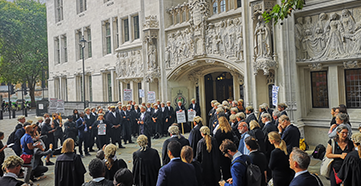
On 7 September, criminal barristers working in the field of legal aid gathered at the Supreme Court in Westminster in England, for a sit-in protest. They shared with the press and the public their concerns about what they claim is government disregard for their pay conditions and the effect on the justice system.
Nov 26, 2021
The International Bar Association (IBA) and the IBA Foundation have announced the final four charities to receive financial assistance from the funding programme set up by the IBA and the Foundation, at the start of the COVID-19 crisis, to support frontline legal aid providers.
Challenging the prosecution of anti-war expressions at the Russian Constitutional Court
Aug 04, 2021
More than 50 years ago, a treaty known as the Hague Evidence Convention was negotiated under the auspices of the Hague Conference on Private International Law to facilitate cross-border cooperation in the taking of evidence in civil and commercial matters. Yet, even among the more than 60 countries that have ratified the Convention, the rules and practices for obtaining evidence vary widely. The differences between civil and common law jurisdictions are often especially pronounced. The types of evidence that may be obtained, and the procedures for doing so, differ significantly between the United States and England. This article aims to provide a practical overview of what litigants can expect in the US and England when seeking evidence for use abroad.
May 14, 2024
An historic US aid package was signed into law at the end of April, months after a political stalemate threatened to derail it.
The rule of law and media freedom: a symbiotic relationship
The problem of declining legal aid for the poor is well known. But what about the predicament of the near-poor, who can no longer afford a lawyer, and had no legal aid to begin with? Enter the D.C. Affordable Law Firm (DCALF) launched in 2016 with the unique aim of reaching America’s desperate second income quintile, by charging fees that top out at $75 rather than $1,800 per hour.
To uphold the rule of law, justice must be available to all. In countries with no affordable access to justice, many sections of society are denied any real form of justice, which particularly impacts women, children and the poor. What can society do to ensure justice is available to all and what is the role of lawyers in this issue?
IBA Annual Conference Mexico City 2024
President Donald Trump’s draft budget reportedly reduces federal funding for civil legal aid from $375m to zero. The idea of eliminating the Legal Services Corporation, whose funding is already low by global and historical standards, had drawn swift condemnation from legal aid leaders of both parties, as well as from leading non-partisan lawyers’ groups.
Next gen legal summit: The fundamentals of international legal practice

Jun 10, 2025
The European Commission has commenced State aid investigations into multinationals’ tax arrangements, including in respect of Apple, Fiat, Starbucks and Amazon. Developments during the past ten years have been seismic, the debates have been fierce and press coverage has been unparalleled. There are both legal and non-legal reasons for this. The main non-legal reasons are the involvement of high-profile multinational companies as alleged aid beneficiaries, the ensuing diplomatic spat between the EU and the US over the alleged ‘targeting’ of US companies and the nexus between the investigations and the EU’s fight against corporate tax avoidance. The main legal reasons are explored in this article. In this article it is asserted that the Commission has overreached and exceeded its mandate by advancing novel legal theories in relation to EU State aid law. More specifically, it has endeavoured effectively to circumvent the unanimity requirement in adopting EU tax legislation by using its exclusive competence in State aid matters to push Member States into adopting OECD taxation standards. The author seeks to demonstrate that, despite some setbacks, the pendulum seems to be swinging towards more deference towards Member States’ tax autonomy in areas where there is no harmonised EU law, and that this is a positive development for two reasons. First, in terms of legal certainty, it provides closure in a series of ‘open’ matters. Second, the Court of Justice of the European Union (CJEU) has sought to strike the right balance between exclusive EU competence (State aid law) and Member States’ tax sovereignty. Through the analysis that follows, the article will endeavour to shed light on a number of questions, as seen through the case law. First, what are the limits to the EU getting involved in national tax policy? Is it legitimate to circumvent those jurisdictional restrictions through the use of State aid policy? Second, what was the logic of the Commission’s approach and what were its weaknesses? Third, did the CJEU fully accept the Commission’s approach? The structure is as follows. The first part will provide some State aid background for those who are not familiar with EU State aid law and recent seminal cases. The second part analyses what the case law means for Member States’ tax sovereignty, while the third part concludes.
Oct 01, 2025
The International Bar Association’s Human Rights Institute (IBAHRI) has issued a joint statement of concern about the recent freezing of bank accounts belonging to several civil society organisations in Georgia as part of an ongoing investigation into alleged 'sabotage' by the authorities.
The role of international law and institutions in attaining Goal 1 of the SDGs
Jan 22, 2024
A report on the Access to Justice and Legal Aid Committee session at the 2023 IBA Annual Conference in Paris.
The rise of cryptocurrencies has presented unique risks and challenges for anti-corruption compliance. This panel will discuss:
- The basics of crypto assets, what they are and how they are being used
- What risks and challenges they present from a compliance perspective
- How regulators and enforcement agencies are approaching the issue
- What risk management tools and approaches are being used to address those risks.
18th Annual IBA Anti-Corruption Conference
By Preeti G. Bhagnani and Eric Lenier Ives. US discovery in aid of international commercial arbitration after Valle Ruiz and Abdul Latif Jameel
New technologies bring new challenges for the modern world and on how to apply the law. To update the legislation may provide a solution, but it takes time, and legislative process is never so fast as the development of upcoming technologies. To interpret the existent legislation is a better solution but depends on studied and experienced lawyers.
Key issues:
- General legislation for AI: data privacy, consumer protection and liabilities.
- Personal data protection in Morocco;
- AI as law operator: what happens to ethics and human touch?
Next gen legal summit: The fundamentals of international legal practice
It is a common feature of financial fraud schemes for the proceeds of the fraud to be scattered across several jurisdictions, frequently through a network of connected entities. For the victims of fraud, the first step in attempts to salvage their investments will often be to seek a worldwide freezing order in the courts of the country in which the defendants and their activities are centred. In many such cases, however, the freezing order in the primary jurisdiction will not be sufficient
This session will hear from leading judges as to their perspective on technology – including AI – and from litigators about the adjustments needed as a result of a much more digitally oriented approach to “justice” and court hearings.
6th Asia Law Firm Management Roundtable: Is your firm 'fit for the future'?
Jul 06, 2023
Artificial intelligence (AI) has started to become established in major legal sectors worldwide. However, risks of algorithmic biases remain real concerns, particularly for the global legal sector. This article explains the most evolved use-cases of AI in the legal sectors, associated risks and the contemporary global deliberations concerning statutory regulation of AI across significant jurisdictions, suggesting the necessity of human intervention in handling the complexities of such systems.
Holding real estate in an international environment requires expert planning. The session will give useful advice to all.
IBA Annual Conference Mexico City 2024
Nov 29, 2022
The IBA, Ukraine’s Ministry of Justice and the Coordination Centre for Legal Aid Provision have announced a joint Memorandum of Understanding setting out terms of support for free legal aid provision in ensuring the effective representation of cases concerning war crimes.
|