Rule of law: ICC counters critics with progress on Duterte and Kony cases

The recent progress made in cases against former Philippines president Rodrigo Duterte and Ugandan warlord Joseph Kony is assisting the International Criminal Court (ICC) in addressing criticisms about its effectiveness. ‘It is a great sign that despite the fact that people are critical, it is working,’ says Marcus Vinicius de Freitas, Senior Fellow at think-tank Policy Center for the New South in Morocco.
Since entering into force in 2002, the ICC has faced criticism including that it lacks enforcement power and operates too slowly. Others have accused the Court of disproportionately focusing on African nations. In September, Burkina Faso, Mali and Niger withdrew from the ICC, accusing it of ‘selective justice’. That’s why progress, particularly in the case of Duterte, is significant, says de Freitas. ‘It is a very strong statement to the world [contradicting] what many people say [about] the ICC being weak and only prosecuting African heads of state,’ he says.
In September, the ICC’s charge sheet for Duterte was released. He’s accused of being criminally responsible as an ‘indirect co-perpetrator’ for the alleged murder of dozens of people. The allegations relate to killings that took place during his first term as Mayor of Davao City as well as others that occurred during the ‘war on drugs’ waged by Duterte while president. In a speech shortly before his arrest in March, Duterte said he wasn’t ‘at fault’ for the ‘war on drugs’ campaign.
The next step is a hearing to determine the charges that will be taken forward based on the evidence available. Duterte’s lawyer claims, however, that he’s too unwell to stand trial and the hearing has been postponed pending a medical assessment. In October, Duterte’s legal team submitted an appeal against the case continuing, arguing that the Court lacks jurisdiction as it didn’t open a fully-fledged investigation into the alleged crimes until after The Philippines left the ICC in 2019.
The case signals that the ICC can bring a former head of state to trial, says Amélie Beauchemin, an international criminal law attorney at Paris-based WJ Avocats. But Kirsty Sutherland, Co-Chair of the IBA War Crimes Committee, isn’t sure how much of ‘a win’ it is for the Court when Duterte’s arrest was reliant on domestic politics. The current president of The Philippines, Ferdinand Marcos Jr, previously had an amicable relationship with Duterte but it appears to have soured. ‘It relies on political will and expedience and that’s one of the ICC’s vulnerabilities,’ says Sutherland.
The cases are a great sign that despite the fact that people are critical, the ICC is working
Marcus Vinicius de Freitas
Senior Fellow, Policy Center for the New South
In what was a significant month for the ICC, a confirmation of charges hearing also took place in September for Joseph Kony, the founder of the Ugandan rebel group the Lord’s Resistance Army, who’s charged with 39 counts of war crimes and crimes against humanity. The militant remains at-large, though the Court ruled that there’s sufficient evidence to take Kony’s case forward – the first in absentia confirmation at the ICC.
Kony’s defence team has raised the concern that confirmation in absentia risks normalising such proceedings without the accused present. Kony himself denied the allegations when interviewed a number of years ago. ‘The problem is that without him present and surrendered to the Court, the case isn’t actually going to go anywhere because procedurally, although you can have a confirmation of charges hearing without the person present, you cannot have the same thing for trial,’ says Beauchemin.
How far the case can go with the defendant in absentia is a matter of some debate, and Sutherland – who’s a barrister at 9 Bedford Row Chambers in London – notes that trying Kony in this way is a test of the processes, and important when it comes to future indictments of the likes of Russian President Vladimir Putin. An ICC arrest warrant was issued in spring 2023 for Putin – alongside Russia’s Commissioner for Children’s Rights, Maria Alekseyevna Lvova-Belova – in connection to allegations regarding the unlawful deportation and transfer of children from Ukraine. The Kremlin denies the allegations. ‘[Individuals such as Putin] are never going to be in the courtroom, but they will be able to get some sort of legal decision that will stand for history,’ Sutherland says.
The two cases demonstrate the ICC’s ability to deliver on its mandate, says de Freitas, but they also highlight the Court’s vulnerabilities. ‘It’s a clear sign that if you do not have state cooperation in the process, then it becomes very complicated for you to be effective. It’s a dual message in both cases,’ he says.
To improve the Court’s functionality, Sutherland says it needs to be properly funded. The majority of its funding comes from the contributions of its member states who, according to research from the University of Illinois Chicago School of Law, underestimate the resources required to effectively investigate atrocity crimes. ‘I also don’t think the ICC is going to be truly free of accusations of bias and selectivity until a Western European or North American leader is in the dock,’ Sutherland adds. To date, no arrest warrants have been issued by the ICC for Western individuals.
For Beauchemin, ‘it’s more a question of making sure that states actually commit to upholding the legitimacy of the Court than what the Court itself could do.’ Principally, members need to avoid ambiguity as to whether they’ll execute ICC arrest warrants against certain individuals.
Beyond these concerns, the US Trump administration has issued sanctions against the ICC – initially via a February executive order aimed at those who engage with or support the Court and targeting its Chief Prosecutor. It has since issued further sanctions against ICC judges and deputy prosecutors. The sanctions are in response to the ICC’s arrest warrants for Israeli Prime Minister Benjamin Netanyahu and former Minister of Defense Yoav Gallant, pertaining to allegations about their actions in Gaza. Israel denies the allegations.
The Trump administration says the ICC has unfairly ‘[targeted] America and our close ally Israel’ and that the US doesn’t recognise the Court’s jurisdiction. The ICC says the sanctions are an ‘attack against the independence of an impartial judicial institution.’
The US is reportedly considering imposing sanctions against the entire ICC. ‘That would really seriously hinder the Court’s ability to function,’ says Beauchemin. She explains that an asset freeze means ICC employees would be banned from using US software such as Gmail and that it would apply to lawyers who have collaborated with the Court.
Despite the challenges, the ICC has to be upheld, says Sutherland. The consequence if it’s not, she says, is a world where horrific war crimes aren’t prosecuted.
Header image: SARATSTOCK - stock.adobe.com
The IBA’s Human Rights Institute marks 30 years of defending the rule of law

This year marks the 30th anniversary of the International Bar Association’s Human Rights Institute (IBAHRI). Founded in 1995 under the honorary presidency of Nelson Mandela, the IBAHRI has spent three decades promoting and protecting human rights and the rule of law globally.
In the article, ‘The IBA’s Human Rights Institute marks 30 years of defending the rule of law’, significant developments from the past ten years are explored. These include the IBAHRI’s work on gender apartheid and evacuating female lawyers from Afghanistan, the creation of the High Level Panel of Legal Experts on Media Freedom and the IBAHRI’s response to Russia’s invasion of Ukraine.
IBAHRI Co-Chair Mark Stephens CBE says, ‘the IBAHRI is a leading force in promoting and protecting human rights worldwide. Through its work at the UN, in parliament, and within individual countries, the IBAHRI provides a vital platform for improving human rights conditions globally.’
The key milestones and significant achievements from the IBAHRI’s first 20 years are covered in ‘Twenty years of the IBA’s Human Rights Institute’. Areas of focus from those years include lawyers’ rights in Myanmar and global threats to rule of law following the 9/11 terrorist attacks.
‘World events continually shape initiatives and projects of the IBAHRI as the organisation strives to respond to current crises, adapt to changes in global regulation, and develop preventative mechanisms to help avert future conflicts,’ says Hina Jilani, IBAHRI Co-Chair.
The IBAHRI’s range of activities includes advocacy and awareness raising, capacity building, technical assistance, fact-finding and trial observations. None of the work of the IBAHRI would be possible without the tireless efforts of the dedicated IBAHRI staff members.
‘By combining legal expertise and advocacy, the IBAHRI responds effectively to current events in order to hold governments accountable for violations and put pressure on governments to secure meaningful change in order to preserve human rights,’ Stephens adds.
Egyptian lawyer Hoda Abdel-Moneim honoured with Human Rights Award

Egyptian human rights lawyer Hoda Abdel-Moneim is the winner of the 2025 International Bar Association (IBA) Award for Outstanding Contribution by a Legal Practitioner to Human Rights. The award, supported by LexisNexis, recognises her remarkable dedication to defending fundamental freedoms and advancing justice, particularly for the rights of women and children, and the fight against enforced disappearances.
Abdel-Moneim was unable to receive the award in person as she remains unjustly imprisoned in Egypt despite completing a five-year sentence in October 2023. While a statement from her could not be obtained due to her imprisonment, her daughter, Gehad Badawy, recorded a message accepting the award on behalf of her mother.
Throughout her distinguished career, Abdel-Moneim has been a leading advocate for human rights in Egypt and has become an inspiration for lawyers internationally. During her time as a member of Egypt’s National Council for Human Rights she championed reforms aimed at improving prison conditions and ensuring the humane treatment of detainees.
Although she completed her sentence on 31 October 2023, Abdel-Moneim remains in custody. Authorities re-arrested her under a new case on identical charges, a practice known as ‘recycling of charges’, which contravenes Egyptian legal principles prohibiting double jeopardy. Her continued detention underscores the growing risks faced by lawyers and human rights defenders in Egypt.
Read the full news release here.
Universal jurisdiction – Good Practice Guide published
Universal jurisdiction allows a state to prosecute individuals for severe international crimes, such as genocide, regardless of where the crime was committed or the nationality of the perpetrator or victim. It is considered a tool of last resort, typically applied when the country where the crime occurred is unable or unwilling to prosecute.
This IBAHRI guide, published in October 2025, is designed to help law and policymakers engage on issues pertaining to universal jurisdiction mandated by certain treaties, as ratified by states and allowed by customary international law. It aims to identify best practices from countries around the world with regard to using the principle of universal jurisdiction to ensure better chances of achieving accountability for international crimes.
The IBAHRI has also been working with REDRESS, Amnesty International and Legal Action Worldwide to engage with UK parliamentarians on the reforms necessary to ensure the UK can play a more proactive role in addressing international crimes.
Ethiopia: urgent action needed as atrocities persist in Tigray
Marking five years since the outbreak of war in Tigray, Ethiopia in November 2020, the IBAHRI has joined a coalition of non-governmental organisations (NGOs) in issuing a joint letter expressing grave concern that atrocities – including mass rape, forced pregnancy, sexual torture, sexual slavery and deliberate starvation – in Ethiopia continue unabated despite the 2022 Pretoria Agreement.
The IBAHRI and partners urge the international community to renew independent monitoring, ensure humanitarian access and pursue accountability for crimes against humanity and war crimes.
The Tigray War ranks among the deadliest conflicts of the 21st century, with estimated death tolls ranging from 600,000 to 800,000. By December 2022, starvation-related deaths were estimated to have reached between 96,000 and 218,000. By 2023, around 19.7 million people in Ethiopia were reported to be facing high levels of acute food insecurity and widespread disease outbreaks amid restricted aid access.
In the joint appeal, the IBAHRI calls on states, the UN and regional organisations to take urgent and concrete measures, including to renew and support independent monitoring, strengthen civilian protection, and ensure unhindered humanitarian access for internally displaced persons, among other actions.
IBAHRI Co-Chair Mark Stephens CBE commented: ‘Violence, displacement and widespread rights violations continue to devastate Ethiopia even though a formal ceasefire is meant to be in place. The closure of the International Commission of Human Rights Experts on Ethiopia [ICHREE] has left a dangerous vacuum in oversight. The international community must act now to re-establish credible monitoring and justice mechanisms before another generation suffers irreparable harm.’
The ICHREE was the last remaining independent and credible investigative mechanism in Ethiopia and was critical for the international monitoring of the crisis. Its final report, published in October 2023, presented a detailed account of the atrocities which amounted to crimes against humanity and war crimes.
Read the full news release here.
Call for submissions from Standing Group on Atrocity Crimes

The Standing Group on Atrocity Crimes, an independent initiative supported by the IBAHRI that aims to strengthen the UK’s approach to atrocity prevention and response, has issued a call for written submissions.
The call forms part of an independent review being undertaken by the Standing Group. This review, supported by expert-led evidence, will assist in the articulation and development of recommendations for a comprehensive and cohesive UK framework to address atrocity-related issues.
The Standing Group welcomes submissions of written evidence on the key issues under review, specifically regarding the UK government’s anticipation, prevention and response to international crimes, as well as resource mobilisation. Written submissions are invited from experts around the world. This may include members of victim/survivor communities, the UN and other international or regional bodies, government departments, as well as academics, journalists, civil society actors, legal practitioners and NGOs.
In Spring 2026, the Standing Group will organise two to three days of oral hearings with experts to further examine the issues under consideration. The final report, gathering the written submissions and oral hearings, is expected to be published in September 2026.
Submissions should be sent to submissions@atrocitystandinggroup.org by midnight GMT on 3 January 2026.
IBAHRI participates at 60th session of United Nations Human Rights Council
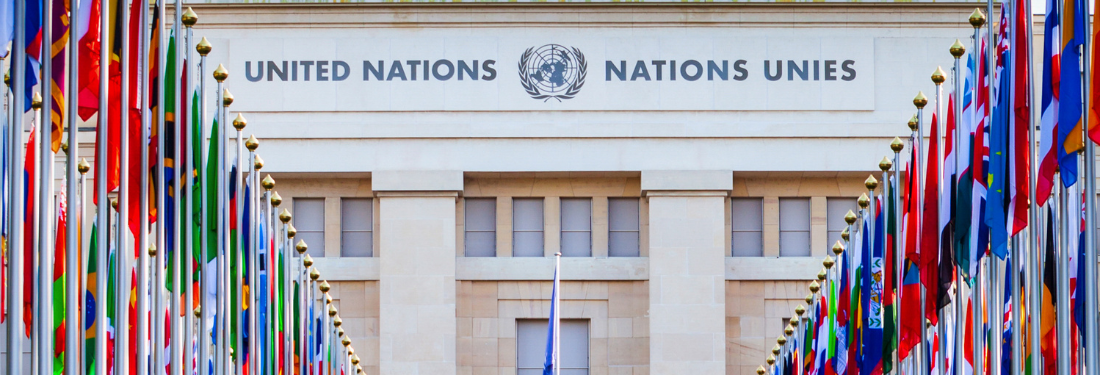
The 60th session of the United Nations Human Rights Council (UNHRC60) was held from 8 September – 8 October 2025 in Geneva. The IBAHRI led or participated in various side events, including on the human rights situation in Afghanistan, arbitrary detention of journalists (through the High Level Panel of Legal Experts on Media Freedom), the death penalty in Asia and the deterioration of human rights and rule of law in Russia. In addition, the IBAHRI co-delivered various statements including on Ukraine and protecting environmental lawyers and advancing climate justice, as well as statements pertaining to many countries.
See a comprehensive round-up here.
Rule of law: UK parliamentary committee speaks out against attacks on judges

In November, the UK’s House of Lords Constitution Committee published a report on the rule of law, arguing that legislators and the media should refrain from launching personal attacks on judges. While noting that ‘discussion and debate about court judgments and the law underpinning them is a normal part of open justice,’ the Committee said this must be distinguished from personal attacks on individual judges or on the judiciary as an institution, which are unjustified.
‘Hostility towards the judiciary’ is one element of a wide-ranging review on challenges to the rule of law considered by the Committee during its nine-month inquiry. The Committee also examined other significant issues such as access to justice and the perception that the law isn’t being equally applied or is being treated with disrespect, including within those institutions responsible for upholding it. The cumulative effect, it found, is the decline of public confidence in the rule of law and the ‘pervasive sense’ that it’s ‘under threat’ in the UK.
Attacks on the judiciary have become prevalent. Judges who have ruled on matters involving housing for irregular immigrants, for example, have been criticised in some sections of the media for their supposed links to specific political organisations or viewpoints. The label of ‘activist’, meanwhile, is often applied to members of the judiciary by lawmakers who disagree with a judge’s ruling in a case.
The problem has been developing for some time, says Sam Townend KC, Chair of the IBA Forum for Barristers and Advocates. He says the first significant example was the substantial criticism directed at a number of senior judges following the High Court ruling in Miller in 2016. In that case, the Court found that the UK government needed the consent of Parliament before triggering Article 50 to exit the EU.
There is a proper channel to ensure the quality and accountability of our judges, and that is not on the political soap box or on the front pages of newspapers
Sam Townend KC
Chair, IBA Forum for Barristers and Advocates
Since then, parts of the mainstream media and, increasingly, lawmakers now regard an attack on judges and lawyers as a political opportunity, says Townend, who’s a barrister at Keatings Chambers in London. ‘If you don’t like a decision, the method by which we have always dealt with that is to appeal to a higher court,’ he says. ‘And there is a proper channel to ensure the quality and accountability of our judges, and that is not on the political soap box or on the front pages of newspapers.’
The Committee’s report also highlights how the rule of law is damaged by well-known problems within the current civil and criminal justice systems and in legal aid provision. ‘A crucial part of the rule of law is that […] people should be able to access the courts to obtain justice, resolve disputes, and protect their rights,’ reads the report.
Citing evidence from witnesses, the report observes that there has been widespread ‘underinvestment’ in the justice system ‘over many years.’ This has contributed to, and exacerbated, the significant issue of delays and backlogs. Here, the report cites criminal justice statistics showing a Crown Court backlog of 78,329 open cases at the end of June, with a quarter outstanding for over a year, while the Magistrates’ Court backlog increased 25 per cent on the previous year, to 361,027 open cases.
The report also remarks on how fairness in the way the law is applied is critical, highlighting the increase in low-level crime and a perception that it’s not being dealt with. ‘Certain crimes, such as “shoplifting, car theft, cycle theft, house burglaries, low-level drug dealing”, have increased over the last few years, and have become more visible,’ says the report. Further, ‘there is a strong media and public narrative that [these crimes] have effectively been “decriminalised” due to police inaction,’ the Committee adds.
‘The absolute core of what for most people the rule of law is about […] is not only knowing the government is going to act within the law but being able to rely on other people acting within the law or, if they don’t, being held to account,’ says Lord Anderson KC, a member of the Constitution Committee. ‘Whether you are looking at non-prosecution of cases or delays in civil courts or lack of access to legal advice, for most people that is the centrepiece of the rule of law in practice.’
Talking about the ‘rule of law’ can still sound vague, however, and the Committee is calling for more public education around what it means for the UK system of government and for individuals. ‘Education is, as ever, the key,’ says Lady Laing, another member of the Committee. ‘But it is really important that the whole matter is simplified and the average person in the street and […] a young person about to leave school is given the chance to understand this.’
Education is a ‘key enabler’ in bolstering what is, for Townend, the ‘cornerstone of our society’ upon which everything else is based. ‘Public safety, commerce and trade, confidence in state institutions, you name it, all rest on the framework of rule of law,’ he says. ‘Cut against it, and all else fails.’
Header image: beketoff/Adobe Stock