Comment and analysis: US presidency - major midterms swing gives mandate for wide-ranging investigations
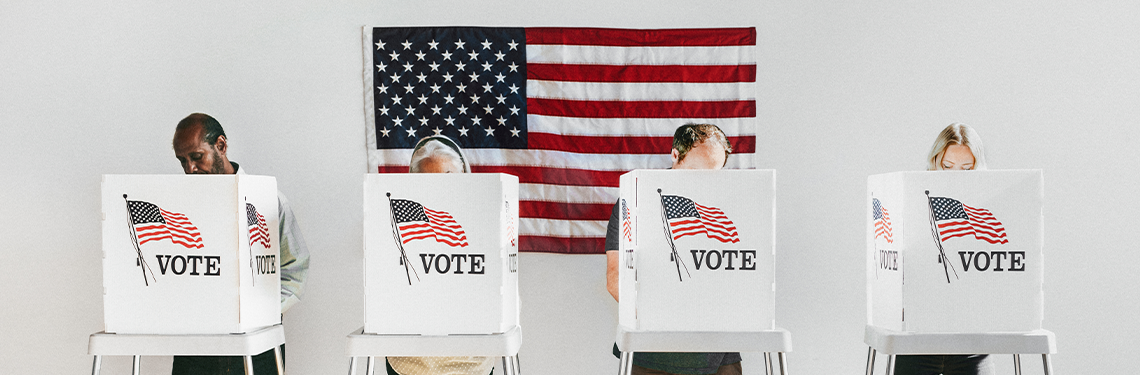
November’s midterm elections saw control of the US legislature shift dramatically. Global Insight considers what could come next for President Trump, his family and the administration.
Historic results in US midterm elections have handed control of Congress – as of January – to President Donald Trump’s opposition. With control of both the House of Representatives and the Senate comes power to investigate Trump’s actions as president over the past two years, including his self-enrichment and that of his family.
As Democrats secured control of the House, California Representative Robert Garcia posted a two-word message on social media: ‘Lawyer up.’ Garcia is the senior Democrat on the House Committee on Oversight and Government Reform and is expected to become its chair when the new Congress is sworn in. The Committee has broad authority to call witnesses, demand government documents and issue subpoenas. Senator Ron Wyden, the Oregon Democrat in line to chair the Senate Finance Committee, was more succinct still. ‘Subpoenas,’ he posted.
The election results give President Trump’s opposition the means to follow through on the tough talk. Democrats won a commanding majority, with 255 seats out of a total 435 in the House as of 11 November, compared to the 168 now held by Republicans. Ballots were still being tabulated in some close races, but the overall result was clear. In the Senate, Democrats won a 56-44 majority after historic victories in states such as South Carolina, Alaska, Mississippi and Texas.
Across the US, about half of voters on election day described government corruption as ‘crucial’ to their decision. Most of them blamed the President and backed Democrats, according to the Associated Press Voter Poll survey. ‘What’s really most notable about this election is just how powerful a negative effect Donald Trump has had on the Republican brand,’ says James Henson, Director of the Texas Politics Project at the University of Texas in Austin, who was speaking days after the vote. ‘When you say corruption to some people, they mean the self-dealing and the self-enrichment that has been such a central part of the Trump presidency, particularly the second term.’ Further, what’s influencing voters, says Henson, ‘is the sense that government, particularly the federal government with Trump at the head of it, is too close to the donor class, is too close to billionaires.’
In a survey of likely voters in Texas, Ohio and Iowa, carried out in October, 86 per cent of respondents said fighting corruption was extremely or very important to their Senate vote. A plurality named billionaires and corporations using their influence to rig the rules as the most serious corruption problem facing the country.
The White House had not responded to Global Insight’s request for comment at the time of publication. President Trump and his administration have previously denied any conflicts of interest or wrongdoing.
Targets for oversight
Democrats will interpret the midterm results as a mandate to subject President Trump and his wealthy backers to investigations. Richard Painter, the S Walter Richey Professor of Corporate Law at the University of Minnesota Law School, expects senators to focus on the Trump family’s income from the cryptocurrency sector. The President has made more than $1bn from the sector ‘even though he said that cryptocurrency was a fraud only five years ago,’ says Painter, who served as Associate Counsel to President George W Bush from 2005 to 2007. President Trump and his family have denied any conflicts of interest, including in relation to the cryptocurrency sector.
Painter watched the last comparable shift from inside the White House after Democrats won Congress in the 2006 midterms and opened investigations into President Bush’s wars in Iraq and Afghanistan. ‘The White House Counsel’s office nearly doubled in size,’ he says.
What lies ahead is set to be ‘on a much grander scale,’ given the volume of ethics allegations in President Trump’s second term, Painter says. Within a week of the midterms, the President’s White House Counsel’s office had reportedly added 15 new hires. ‘If Democrats choose to pursue sham investigations and radical left policies, they are choosing to work against the American people,’ White House spokesperson Lauren Bis told reporters.
Democratic chairs-in-waiting have already set out their targets. In a press conference the day after the election, Garcia said that the Oversight Committee will focus on what he calls ‘the Trump crime family’, including the President’s cryptocurrency ventures, as well as alleged abuses by US Immigration and Customs Enforcement – which the agency denies – corporate practices such as ‘surveillance pricing’ and the Justice Department’s handling of the Epstein files.
The list of potential oversight topics is long, but the illegal war against Iran is top of mind for me and the American people
Representative Adam Smith
Maryland Representative Jamie Raskin, the incoming chair of the House Judiciary Committee, has said the big law firms that struck deals with President Trump in 2025 can expect subpoenas. The law firms ‘capitulated to coercive tactics’ and ‘made all sorts of outrageous concessions,’ Raskin says.
Major law firms that reached agreements with Trump in 2025 explained that they were protecting clients, employees and their ability to continue operating in Washington, not necessarily endorsing the President’s policies. In letters to Rep Raskin last year the firms rejected any suggestion that the deals had been illegal or unethical.
Massachusetts Senator Elizabeth Warren is expected to use the Senate Banking Committee to examine the Trump administration’s relationships with Big Tech and Wall Street. Already, the senator has reportedly cautioned Trump officials, tech CEOs and Wall Street bankers to preserve their documents.
Representative Adam Smith wants the House Armed Services Committee to scrutinise the war against Iran and America’s military strikes on boats in the Caribbean and Pacific. ‘The list of potential oversight topics is long, but the illegal war against Iran is top of mind for me and the American people,’ Smith stated. President Trump initially characterised the war against Iran as a pre-emptive defensive measure intended to prevent Tehran from acquiring a nuclear weapon.
For all the warnings to ‘lawyer up’, the formal enforcement tools used by Congress are slow and limited when the White House refuses to cooperate. If Trump officials fail to testify or turn over documents, the remedy available to Congress is a vote to hold an official in contempt. But enforcement through a contempt referral goes to the Justice Department, whose leadership answers to the President. The alternative, asking a federal court to enforce a subpoena, ‘takes a very long time and it’s very difficult,’ says Painter. Such legal disputes can outlast a two-year Congress.
While lawmakers have constitutional and legal authority to investigate the executive branch, as a practical matter their real leverage comes through funding legislation. The most powerful tool that Congress has at its disposal is the ability to refuse to appropriate funds. With large majorities, Democrats can make cooperation with oversight a condition of agency budgets, though at the risk of confrontation with President Trump over a government shutdown.
Complicating the ability of Congress to investigate is the Supreme Court’s 2024 ruling in Trump v United States, which gave presidents broad immunity from criminal prosecution for official acts and shields the administration from scrutiny. The ruling, however, does not relieve presidents from the obligation to turn over evidence to Congress. Nor does it protect other officials from potential legal liability, meaning those who committed crimes can be prosecuted.
The White House digs in
The administration has given little sign of altering President Trump’s course. Responding to Garcia’s statements, White House counsel Will Scharf wrote that ‘threats to executive branch officials designed to deter them from public service, or process designed merely to abuse or instil fear in the recipient may cross the line into blatant criminality.’
Before the election, Stephen Miller – now White House Chief of Staff – and Budget Director Russell Vought reportedly drew up plans to govern through executive action if Democrats won. President Trump said he expects to veto any legislation the new Congress puts forward. ‘I guess I’ll become Mr Veto,’ he said in an interview excerpt released on 1 November. ‘And then at some point, we’ll probably make deals.’
And President Trump has signalled he would issue pre-emptive pardons if necessary to protect his people from prosecution. A person pardoned for particular conduct also can’t rely on the Fifth Amendment to refuse to testify about it, which may make that individual easier for Congress to question.
Miller’s new post may complicate efforts to compel his testimony about President Trump’s mass deportation campaign, of which he was the architect. The Justice Department has long argued that a president’s closest advisers are immune from congressional subpoenas. In August, the White House sought to expand its claim of ‘executive privilege’ to shield communications, not only between the president and their top advisers, but also with private actors.
Companies and private individuals can’t claim executive privilege on their own, and Democrats are expected to start there. Law firms and public affairs teams – both external agencies and those in-house within companies – were reportedly scrambling after the election to hold emergency briefings for executives.
Meanwhile, Democrat leaders have played down the prospect of impeaching the President. Trump was impeached twice in his first term, causing supporters to rally around him. Instead, expect Congress to now pursue impeachments of cabinet officers. Conviction in the Senate requires a two-thirds vote, but Republican senators, hopeful of re-election in 2028, might vote with Democrats.
The investigations will build a record that outlasts this Congress. The federal statute of limitations for most crimes is five years, so conduct from early 2025 could still be prosecuted by a new administration after President Trump leaves office in January 2029. That applies to ICE officers who believed they were immune from prosecution and may learn otherwise. It would also apply to the President himself, even under the Supreme Court’s immunity ruling, if investigations were to uncover any ‘unofficial’ acts that have broken the law.
William Roberts is a US-based freelance journalist and can be contacted at wroberts3@me.com
Header image: rawpixel.com/Adobe Stock