|
|
Jan 13, 2017
COMUNICADO À IMPRENSA: sexta-feira, 13 de janeiro de 2017. Diante das rebeliões ocorridas em presídios de Manaus e Roraima no Brasil, os quais resultaram na morte de cerca de 100 pessoas e na fuga de diversos presos, o Instituto de Direitos Humanos da International Bar Association (IBAHRI), exorta as profissões jurídicas do país a trabalharem com urgência pela melhoria das condições das prisões e pela criação de ambientes nos quais os direitos humanos dos presos e servidores do sistema prisional sejam respe
For sanitation companies and water utilities, the 'dry tap' scenario — the point at which supply can no longer meet demand — has moved from a hypothetical worst case to a foreseeable business reality.
In this new reality, water recycling and reuse are no longer innovative options; they are essential components of climate adaptation and business continuity.
IBA Annual Conference Copenhagen 2026
The Power Law Committee provides a forum for energy lawyers from diverse legal backgrounds to interact, share ideas, new trends, and foster collegiality.
We explore different topics: international ownership, mitigating climate change, energy transition, regulatory methodologies, power purchase arrangements, transmission siting, access and pricing, engineering procurement and construction, operation and maintenance, reliability standards and compliance, fuel procurement and hedging arrangements, new technologies, among others.
We aim to provide our members with practical and useful advice to better serve clients, and to offer the opportunity for collaboration, networking and friendships.
In spring 2018, the International Bar Association's Human Rights Institute (IBAHRI) and the Anti-Torture Initiative (ATI) reached the milestone of conducting tailored programmes in all five regions of Brazil on torture prevention and implementing the Istanbul Protocol. The IBAHRI has worked in Brazil since 2010 to support the country in its commitment to eradicate torture as part of its obligations under international law
DiversityInclusionD&O claims are on the rise across the globe. Over the last decade directors and officers of public and private companies have increasingly become targets in civil litigation, government investigations, and enforcement actions.
IBA Annual Conference Miami 2022
A Instituto de Direitos Humanos da Associação Internacional de Advogados (“IBAHRI”) e o Iniciativa Anti-tortura (“ATI”) expressam grande preocupação e condenam a decisão do Governo brasileiro de estabelecer severas limitações ao trabalho do Mecanismo Nacional de Prevenção e Combate à Tortura (“Mecanismo Nacional”). A medida representa uma perigosa redução da proteção dos indivíduos privados de liberdade.
This session will talk about how to become an outstanding leader.
Fundamentals of International Legal Business Practice: IBA Young Lawyers’ Training Course Helsinki
Aug 15, 2024
Parte do projeto “50:50 até 2030”, o relatório examina a disparidade de gênero na profissão jurídica no Brasil.
For too long, perpetrators have escaped accountability for international crimes by hiding away from the authorities seeking to investigate and prosecute them. Others escape justice as the authorities do not investigate the crimes, the countries lack relevant legislations, investigative capacities, shy away from dealing with past crimes, among others.
The principle of universal jurisdiction was meant to address all these challenges. The principle of universal jurisdiction allows domestic authorities to exercise criminal jurisdiction over alleged perpetrators, regardless of where the alleged crime was committed and irrespective of their nationality. However, as countries globally started domesticating the principle, they took very diverse approaches, often limiting the potential of the principle.
The fight against impunity cannot have any borders. As such, the principle of universal jurisdiction must be used to the fullest to ensure the investigation and prosecution of serious violations of international law.
During this session, experts will discuss the use of universal jurisdiction globally - mapping the plethora of cases from the last five years. They will discuss how the cases came into being, including by way of civil society engagement. Experts will consider how the approaches in response to the war in Ukraine can help to make the principle of universal jurisdiction more widely used. They will further discuss recent developments in the area and further opportunities ahead.
IBA Annual Conference Toronto 2025
News release, Tuesday 12 November 2018. O Instituto de Direitos Humanos da International Bar Association (IBAHRI) divulgou um vídeo sobre prevenção à tortura no Brasil no qual atores interessados locais e especialistas internacionais opinam sobre o histórico da tortura no país e os desafios atuais para sua prevenção e persecução penal. O vídeo também ilustra como o trabalho do IBAHRI está contribuindo para fortalecer a capacidade de o Brasil defender seu compromisso tanto nacional como internacional com a
Political cartoons and satire have a long and powerful history of pricking our conscience and calling out authority. But around the world, this art form - and the artists who create it - are under threat. The panel will explore the political and economic forces behind the dramatic decline in political cartoons, the physical and legal threats to cartoonists, and efforts to defend the artform.
IBA Annual Conference Paris 2023
Sep 10, 2024
In the experience of the Working Group for the Site Visit Model Protocol (the ‘Working Group’), site visits can be a helpful procedural tool in international arbitrations. They serve two general purposes.
In 2017 the late Stephen Hawking, English theoretical physicist and cosmologist, said: ‘Unless we learn how to prepare for, and avoid, the potential risks, AI [artificial intelligence] could be the worst event in the history of our civilisation. It brings dangers and new ways for the few to oppress the many.’ The rise and rise of AI has been breathtaking – while it took the telephone 75 years to reach 100 million users, it took only two months for ChatGPT to reach 100 million users. Are we bringing everyone along on the AI journey or are some sectors of the workforce being left behind? This session will explore the effect of AI and its impact on the workforce from a diversity and equality perspective.
IBA Annual Conference Mexico City 2024
Mar 09, 2021
O International Bar Association’s Human Rights Institute – IBAHRI (Instituto de Direitos Humanos da International Bar Association) apresentou uma petição de amicus curiae ao Supremo Tribunal Federal do Brasil sobre as leis, normas e padrões regionais e internacionais de direitos humanos, a respeito da jurisdição militar em face de graves violações dos direitos humanos em tempo de paz.
IBA Young Lawyers' Committee Training: Becoming a champion
When everything is going online and staff are being asked to work from home, one can still hear construction activities going ahead in several sites in central London and beyond. This article aims to explore the arguments for and against keeping construction sites open during the London lockdown due to the Covid-19 pandemic. If a second wave of the virus eventuates, we may need to address these difficult questions again.
Site visits are frequently used in energy, mining and construction arbitrations and can be an essential evidentiary tool in international arbitrations. This session is targeted at arbitration lawyers, industry-specific legal practitioners, as well as experts, and will highlight the practical, legal and strategy considerations at play when conducting site visits in arbitration proceedings. Drawing on work conducted by the IBA Arbitration Committee Working Group on Site Visits, the session will also cover current best practice and lessons learnt from past site visits, including how the audience can benefit from the brand new tool IBA Site Visit Model Protocol.
IBA Annual Conference Mexico City 2024
Oct 11, 2019
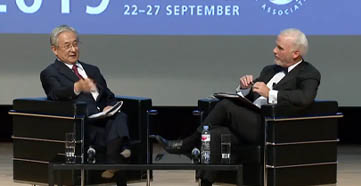
O-Gon Kwon is an attorney-at-law at Kim & Chang and serves as the president of the firm’s International Law Institute.
A soft aspect which has hard impact: how cultures and site locations influence the success of a project and what we can learn from diverse cultures.
9th Biennial Conference on Construction Projects from Conception to Completion
Differing site conditions: contrasting the English and US legal systems
The legal services market is not immune to the rapid advance of new technologies. Contenders in this market need to implement and constantly adapt to these changes to avoid being left behind. Now more than ever, clients require efficient and quick solutions to their legal needs. The timely delivery of the solution can be easily hindered if lawyers do not implement technological tools that aid them in their daily business. In this session, we will focus on some trends and challenges regarding the implementation of these tools.
Biennial IBA Latin American Regional Forum conference
A panel on the latest developments in global merger control.
IBA Annual Conference Paris 2023
Jul 20, 2023
In late May, UK Magic Circle firm Allen & Overy (A&O) and New York-based firm Shearman & Sterling announced plans to merge.
Apr 05, 2022
Purchasing directors and officers insurance (D&O insurance) is a standard practice for public companies in the United States. The same is not standard practice in another major economic power, China, but that may no longer be the case. The demand for D&O insurance has recently spiked in China in response to the new Chinese Securities Law that went into effect in March 2020.
Drivers of change in the legal profession and legal education (North America)
Jul 25, 2023
A conference report on the ‘Tech or no tech? There is NO question. Lawyers cannot afford not to resort to new technological tools’ session from the Biennial IBA Latin American Regional Forum Conference: Technology, social media and artificial intelligence: challenges for the legal industry in the digital age.
This panel will examine the evolving landscape of corporate accountability, focusing on the personal liability of officers and directors for human rights violations committed by corporations. With rising expectations on companies to uphold human rights standards across global supply chains, executives face increasing scrutiny over their roles and responsibilities. The discussion will address recent legal developments, key cases, and the frameworks that are shaping accountability, from national regulations to international guidelines such as the 'United Nations Guiding Principles on Business and Human Rights'. Esteemed experts in corporate law, human rights, and governance will analyse the risks and implications for leadership in an era where corporate responsibility extends beyond financial performance.
IBA Annual Conference Toronto 2025
The present article aims to explore the recent changes in Brazilian regulations brought by Law No. 14,034/20, expected to aid airlines and industry players during the coronavirus (Covid-19) pandemic, as well as its impacts on the future development of the aviation sector and the possible creation of a more business-oriented regulatory environment.
Nov 16, 2021
Lobbying scandals and efforts to undermine the judiciary are eroding public trust in British democracy and standards in public life.
Wage-fixing, no poach & beyond: antitrust in labour markets
Mar 20, 2023
In this column, written exclusively for Global Insight, Ukraine’s Prosecutor-General, Andriy Kostin asserts the importance of holding Russian leaders accountable for the crime of aggression against Ukraine via a special ad hoc tribunal.
Orchestrating a cybersecurity symphony – Part two: Why law firms should consider cybersecurity as an alternative business structure
Aug 12, 2020
As cities scrambled to remove statues amid surging Black Lives Matter protests, the President of France stood firm. Global Insight explains why.
IBA Global Insight, Aug/Sept 2016 - Recent court reforms should increase competency and help to reduce corruption
within the judiciary, but will not fundamentally challenge the status quo
Constitution after coup: Brazil - a Rule of Law Forum series

Jun 22, 2021
This article considers what the Canadian approach should be to the regulation of no-poach and wage-fixing agreements. It provides an overview of the dual-track approach to agreements between competitors included in the Canadian Competition Act; explains why no-poach and wage-fixing agreements have become such a ‘front and centre’ issue in Canada for both the Canadian Competition Bureau and politicians; describes the approach to no-poach and wage-fixing agreements in Canada and in various jurisdictions around the world; and discusses the path forward in Canada, including our opinion that the Bureau will likely push for amendments bringing no-poach and wage-fixing agreements within the scope of the Competition Act’s per se criminal cartel provision – inline with the approach of enforcement agencies in the United States. However, this article highlights that the nuanced and contextual effects of no-poach and wage-fixing agreements, which have yet to be fully understood in Canadian labour markets, may necessitate a more fulsome analysis of these agreements under section 90.1 of the Competition Act.
Sep 01, 2022
Whistleblowing complaints on financial, ethical, and legal issues are on the rise in India. With the law not having evolved at the same pace, it has created even more uncertainties in the regulatory environment. However, consciously, many Indian corporates have adapted and changed gears, ushering in a new mindset, and incorporating policies to achieve the broader objective of ‘no fraud-no corruption’.
Mar 16, 2022
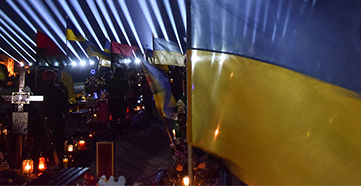
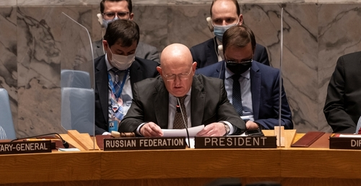
Russia’s invasion of Ukraine has horrified the world and spurred regional bodies, notably the EU and NATO, into taking concrete action to help Ukrainian refugees and provide military assistance to the country.
Constitution after coup: United States - a Rule of Law Forum series
Oct 08, 2025
On 2 June 2025, the European Commission issued its first decision on no-poach agreements. Following dawn raids in July 2022 and November 2023, it fined Delivery Hero and Glovo €329m for participating in a food delivery cartel, which comprised not only no-poach agreements but also information exchanges and market partitioning. The Commission’s decision follows a wave of national European precedents initiated in 2019 that condemned employment-related practices. While the debate around the qualification of no-poach agreements is relatively new at the European level and is currently being clarified by the Court of Justice of the EU (CJEU), the United States has been exploring this issue for more than a decade.
In Afghanistan and Iran, being a woman translates to a life of bans and barriers, from education to public spaces and most forms of employment. It's a reality of being a perpetual second-class citizen. While international law defines apartheid (Afrikaans: “apartness”) with reference to institutionalised racial segregation, the systematic gender-based discrimination faced by women lacks a comparable legal framework. The moment has arrived to stretch the boundaries of apartheid, encompassing the realm of gender hierarchies.
IBA Annual Conference Paris 2023
IBA Global Insight June/July 2016. A third of all Mossack Fonseca’s business originated from its offices in Hong Kong and China. Local media coverage of the leaks has been inconsistent and, in some cases, actively censored by authorities fearing the consequences of these and further revelations.
This session will address the current state of international economic sanctions laws, including the impact on trade, financial services, technology, and transportation. The panel will focus, in particular, on the impact of counter-sanctions and blocking programmes, including those of the People’s Republic of China and European Union, and how to navigate circumstances in which such laws conflict. As part of that discussion, this panel will address the role of the attorney in advising on sanctions compliance, particularly where there is a conflict of laws, and how attorneys can mitigate their own professional risk under such circumstances.
IBA Annual Conference Miami 2022
May 28, 2024
The Brazilian General Data Protection Law (LGPD) represents a significant milestone for data protection in Brazil, aligning itself with international standards and providing a solid legal framework for the privacy of personal data. As a part of this process, Resolution CD-ANPD No 15, of 24 April 2024, has emerged as a crucial regulation that establishes the procedures for reporting security incidents. This article will analyse the main aspects of this resolution, assessing its strengths, limitations, impacts and suggesting possible improvements.
The Covid-19 pandemic brought an intense period of enforced temporary changes to the way we resolve disputes and administer justice. The transition to innovative virtual – remote and online – courts hearings, arbitral and mediation sessions, is both thrilling and concerning. Whether the transition and changes made should be reversed or not, leads to some fundamental questions. It is all about the right balance in protecting both the rights and interests of parties and the public while using technological opportunities which can improve (reform) practices of the court, arbitral tribunals and mediators and assessing improvements in access to and lowering the costs of justice – after all, we should never waste a good crisis.
This joint session aims to map the landscape of the Covid-19 online transition, exploring lessons learned; what has worked, and what has not, promises and best practices for maintaining juridical quality, legitimacy, and efficiency. Initially it seemed the principles to open justice, which remain paramount, were threatened. Yet benefiting from the tech development of wide-spread open-access live streaming, proceedings suddenly became far more accessible than before – just an example: the UK Supreme Court’s livestream of important Brexit litigation was reportedly viewed by almost 30 million people. How reporting restrictions and protected evidence coexist with online open justice is yet to be seen. While saving time and money, relieving parties and their legal teams from the need to travel and time to be called to a hearing, the physical experience of an online hearing is significantly different from being inside a courtroom or before an arbitral tribunal. Could the lack of ritualistic aspects of a formal hearing and feelings of distance, foster distrust rather than belief in the legitimacy of the authority of the court or tribunal? What is the effect of depersonalizing the dispute resolution process, especially non-verbal cues like body language and eye contact (even when web cameras are employed)? May parties feel that they have not been fully heard? Can the required level of trust, for fruitful mediation, be achieved online? How are judges able to properly ascertain the credibility of a witness online? Although virtual hearings suggest that they tend to be more focused than hearings in person, could ‘zoom-fatigue’ be detrimental to the quality of decision-making of judges, lawyers and parties? Just to name a few challenges, which will undoubtedly lead to a lively debate and exploration of best practices in remote dispute resolution.
IBA Annual Conference Miami 2022

Nov 21, 2025
This article examines how deepfakes – AI-generated or manipulated audio, image, and video – destabilise evidentiary assessment in arbitration. Beyond the risk of convincingly falsified exhibits, deepfakes fuel the ‘liar’s dividend,’ whereby the mere possibility of manipulation is invoked to discredit authentic proof. Detection remains technically challenging, costly, and unevenly accessible – especially for mid- and small-value cases. Drawing on recent litigation experience, the EU AI Act’s transparency framework, and broader evidentiary principles, the article highlights how these difficulties risk undermining fairness, efficiency, and equality of arms. After a brief technical primer on deepfakes and their detection limits, the discussion distills lessons from court cases (including the emergence of the ‘deepfake defence’) and evaluates arbitration’s current evidentiary toolbox, highlighting risks of chilling effects and cost inflation if authenticity burdens are misplaced. While arbitration is not without safeguards – party autonomy, due process, procedural loyalty, ethical duties, and soft-law instruments – the article questions whether these tools are sufficient in practice. The contribution is ultimately pragmatic: safeguard fair and efficient truth-finding by reinforcing proportional verification, targeted expert input, and principled tribunal case management – so that access to justice is preserved when seeing is no longer believing.
Will clients use it in place of their lawyers? This is no longer the stuff of mere science fiction, and this timely and informative session will delve deeply into how it will change our professions and the services we provide to our clients.
IBA Annual Conference Paris 2023
Nov 29, 2024
On 11 September 2024, the Property (Digital Assets etc) Bill was introduced to Parliament in England. For the first time ever, digital assets can now be considered as personal property under English statutory law. In this article, we seek to explore the key provisions of the Bill, and the implications for conducting litigation in the digital age
The panel will discuss:
- Extraterritoriality of IP rights extending outside the issuing country and cross-border injunctions;
- Permanent injunctions after trial are virtually guaranteed in some jurisdictions and a pipe dream in others;
- How to reconcile transnational supply chains and territorial protections;
- Contributory infringement, i.e. the grey zone between IP protection and free competition;
- The challenges of coordinating multi-jurisdictional litigation.
IBA Annual Conference Toronto 2025
Oct 14, 2022
By including active case management tools in Procedural Order No 1 and Procedural Timetable No 1, the tribunal lays the foundation for maximising efficiency over the life of the proceeding. In this article, the author proposes a number of innovations to be implemented, as the title suggests, to top and tail the process, with additional steps in the middle. The author provides a template Procedural Timetable No 1 and then discusses selected procedural steps with the corresponding text for Procedural Order No 1. The proposals include pre-scheduling several case-management conferences to address procedural issues early and often; holding a mid-stream meeting (aka a Kaplan Early Opening), where parties give short oral arguments and present limited witness evidence; identifying a pre-scheduled mediation window to allow the parties to consider mediation, without either side having to request it; directing the parties to provide a Joint List of Issues and Schedule of References; and scheduling both a pre-hearing Tribunal meeting (aka a Reed Retreat) and deliberation days in the Timetable.
In this panel you will hear how in financing insolvency proceedings the unique features of various jurisdictions impact the length of the sales process and structure of the deal. What obligations can be cleansed through a sales process? How do employees fare through it all? What about the credit bid rights of the elephant in the room: the secured lender? This panel of experts will provide key perspectives on recent interesting cases, along with insights for the future of the sale of distressed companies in court proceedings.
31st Annual IBA Global Insolvency and Restructuring Conference
Jun 13, 2022
The first panel session at the 23rd Annual IBA Arbitration Day discussed the need for more robust case management by arbitral tribunals.
This panel will discuss identifying IP assets, verifying ownership of the IP assets, assessing how coverage of the IP assets aligns with a company's business goals, and identifying third-party IP risks. For AI technologies, the panel will discuss additional questions concerning data privacy, compliance with open-source licenses, and eligibility for patent protection.
IBA 6th Silicon Hills Conference – the Tech Epicentre of Texas: from Start-Up to Exit
Jan 03, 2023
The Anti-Corruption Law was first regulated, at the federal level, by Decree No 8,420 of 18 March 2015. On 12 July 2022, more than seven years later, Federal Decree No 11,129 of 11 July 2022, which regulates Anti-Corruption Law and repeals Decree No. 8,420/2015, was published by the Brazilian government. This article provides a detailed overview of the new Decree.
An interactive session discussing the evolving role of lawyers and law firms in the context of regulation of lawyers and client expectations requiring those running law firms to wear multiple hats, including CEO, COO, CFO, Head of Human Resources, Head of D&I, Director of Procurement, Money Laundering Reporting Officer (MLRO), Director of Business Development and Public Relations, Crisis manager, Head of Sustainability, etc.
IBA Annual Conference Mexico City 2024
|