|
|
Sep 10, 2024
In the experience of the Working Group for the Site Visit Model Protocol (the ‘Working Group’), site visits can be a helpful procedural tool in international arbitrations. They serve two general purposes.
A soft aspect which has hard impact: how cultures and site locations influence the success of a project and what we can learn from diverse cultures.
9th Biennial Conference on Construction Projects from Conception to Completion
The Power Law Committee provides a forum for energy lawyers from diverse legal backgrounds to interact, share ideas, new trends, and foster collegiality.
We explore different topics: international ownership, mitigating climate change, energy transition, regulatory methodologies, power purchase arrangements, transmission siting, access and pricing, engineering procurement and construction, operation and maintenance, reliability standards and compliance, fuel procurement and hedging arrangements, new technologies, among others.
We aim to provide our members with practical and useful advice to better serve clients, and to offer the opportunity for collaboration, networking and friendships.
Jan 13, 2017
COMUNICADO À IMPRENSA: sexta-feira, 13 de janeiro de 2017. Diante das rebeliões ocorridas em presídios de Manaus e Roraima no Brasil, os quais resultaram na morte de cerca de 100 pessoas e na fuga de diversos presos, o Instituto de Direitos Humanos da International Bar Association (IBAHRI), exorta as profissões jurídicas do país a trabalharem com urgência pela melhoria das condições das prisões e pela criação de ambientes nos quais os direitos humanos dos presos e servidores do sistema prisional sejam respe
Site visits are frequently used in energy, mining and construction arbitrations and can be an essential evidentiary tool in international arbitrations. This session is targeted at arbitration lawyers, industry-specific legal practitioners, as well as experts, and will highlight the practical, legal and strategy considerations at play when conducting site visits in arbitration proceedings. Drawing on work conducted by the IBA Arbitration Committee Working Group on Site Visits, the session will also cover current best practice and lessons learnt from past site visits, including how the audience can benefit from the brand new tool IBA Site Visit Model Protocol.
IBA Annual Conference Mexico City 2024
When everything is going online and staff are being asked to work from home, one can still hear construction activities going ahead in several sites in central London and beyond. This article aims to explore the arguments for and against keeping construction sites open during the London lockdown due to the Covid-19 pandemic. If a second wave of the virus eventuates, we may need to address these difficult questions again.
The objective of the session is to discuss how multinational electronic platforms such as Uber and AirBnB are being held liable or not liable for similar actions in different jurisdictions. The panel will try to answer the question about the existence of a single or multiple principles guiding lawmakers and courts around the globe in regard with accountability of electronic platforms for their wrongdoings.
IBA Annual Conference Miami 2022
Differing site conditions: contrasting the English and US legal systems
It is consensus that one of the most difficult subjects regarding damage compensation is establishing the amount due in cases of moral, existential or spiritual suffering imposed by unlawful actions. It is even more challenging when the victims do not have the same cultural background of judges and lawyers, like in cases of harm caused to indigenous peoples, ethnic minorities or isolated communities. This session will dive into this topic to investigate if it is possible to think in criteria or methods to quantify compensation due in such cases.
IBA Annual Conference Paris 2023
Aug 15, 2024
Parte do projeto “50:50 até 2030”, o relatório examina a disparidade de gênero na profissão jurídica no Brasil.
Recently, there has been an increase in cases related to damages incurred in underdeveloped countries that are being brought before European or US courts. A significant number of these cases rely on litigation funding. While litigation funding is allowed in many jurisdictions, it does carry certain risks and ethical concerns, particularly in the context of transnational damages claims. The purpose of this panel is to explore the potential and boundaries (if any) of litigation funding in transnational claims for damages compensation.
IBA Annual Conference Mexico City 2024
The responsibility of supply chains and value chains is an emerging trend in Europe, the US and other parts of the world. Human rights violations by agents in a certain supply or value chain are one of the most common issues when we look at the current ongoing cases in Europe and US. The goal of this panel will be to discuss the current state of affairs on the topic and also to try to anticipate what the next challenges to deal with will be in the coming years.
IBA Annual Conference Mexico City 2024
Brazil is currently focused on privatising state-controlled entities. While this may present great investment opportunities, given Brazil’s issues with corruption, it carries a considerable amount of risk. This article establishes practices and precautions to uphold investors’ interests in cases of corruption, fraud or mismanagement. In doing so, it will endeavour to compare the US and Brazil’s statutes of limitation rules, proceeding with a practical analysis of civil actions for damages filed by investo
This panel will examine the evolving landscape of corporate accountability, focusing on the personal liability of officers and directors for human rights violations committed by corporations. With rising expectations on companies to uphold human rights standards across global supply chains, executives face increasing scrutiny over their roles and responsibilities. The discussion will address recent legal developments, key cases, and the frameworks that are shaping accountability, from national regulations to international guidelines such as the 'United Nations Guiding Principles on Business and Human Rights'. Esteemed experts in corporate law, human rights, and governance will analyse the risks and implications for leadership in an era where corporate responsibility extends beyond financial performance.
IBA Annual Conference Toronto 2025

Oct 13, 2022
There has been tangible change in international commercial relations in light of the 2022 economic sanctions imposed by the EU, UK and US following developments in Ukraine in February 2022. Lord Mance (at a Global Arbitration Review ‘GAR Live London’ in July 2022) made the comment ‘by far the most likely effect of sanctions in international arbitration is to the funding of cases outside Russia where one party is sanctioned and their assets frozen’. This article considers the implications on international arbitration from both procedural and substantive perspectives. It also touches on the implications under international law. In short, there are a number of ‘procedural’ difficulties to ongoing international arbitrations and on the ability to effectively enforce international arbitral awards. There are also risks, although more limited in scope, to substantive provisions of contract which may or may not lead to an increase in arbitration. Although there will be changes and limitations to international arbitration in light of the EU, UK and US sanctions, this article concludes that those limitations and will be minimal in scope and application. This is because arbitral rules and tribunal case management powers can happily regulate the disruption caused by sanctions. The article also concludes that international arbitration will see an increase in the use of orthodox substantive rights and obligations relating to frustration, impossibility, illegality and hardship. Hardship pursuant to various Civil Codes will be especially popular.
This panel will examine how traditional legal concepts of fault, duty and causation apply to AI systems and will discuss the allocation of risk among developers, users and third parties. We will address ethical, regulatory and enforcement challenges in AI-related harms and review frameworks for responsible AI governance and compensation mechanisms.
IBA Annual Conference Copenhagen 2026
Mar 09, 2021
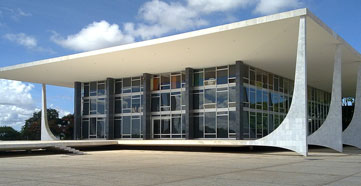
O International Bar Association’s Human Rights Institute – IBAHRI (Instituto de Direitos Humanos da International Bar Association) apresentou uma petição de amicus curiae ao Supremo Tribunal Federal do Brasil sobre as leis, normas e padrões regionais e internacionais de direitos humanos, a respeito da jurisdição militar em face de graves violações dos direitos humanos em tempo de paz.
The reparation movement is one of the most pressing internationally and it presents some very challenging jurisprudential problems worldwide regarding the very concept of damages and the assessment and quantum of damages and the availability of other remedies. The aim of the panel will be to discuss how these challenges shall be addressed locally and internationally.
IBA Annual Conference Miami 2022
This article explores recent measures adopted by Brazil to promote aerospace exploration through its launch base located in Alcântara. It also highlights the importance of the executed agreements to the development of Brazil’s air space programme.
Professional wellbeing issues may affect lawyers' performance in law firms and lead to malpractice and liability of individuals and firms. This session will investigate what the ethical limits for firms and professions are in order to disclose ongoing wellbeing issues to clients and how it may impact their professional liability in case of mistakes and malpractices.
IBA Annual Conference Paris 2023
Sep 29, 2022
After 2013, with the increase in shale oil production and the consequences of the commodities crisis, Angola entered into a significant crisis, its economy depending, at the time, on oil and gas production and 95 per cent of public revenues coming from the industry.
The paradigm for water management has fundamentally shifted. Once considered a limitless utility, reliable water access is now one of the most critical vulnerabilities for both public and private enterprises in the face of persistent drought, climate volatility and population growth.
For sanitation companies and water utilities, the 'dry tap' scenario — the point at which supply can no longer meet demand — has moved from a hypothetical worst case to a foreseeable business reality.
In this new reality, water recycling and reuse are no longer innovative options; they are essential components of climate adaptation and business continuity.
This session confronts the profound legal exposure for directors and officers who fail to act. We will explore how the decision to delay, defer, or reject capital investment in proven water reuse technologies is being reframed as a critical failure of oversight and a direct breach of fiduciary duty.
When a utility fails, or a corporation's operations halt due to a predictable water shortage, stakeholders — from investors to regulators to the public — will not ask if the board knew about water recycling, but why they failed to implement it.
IBA Annual Conference Copenhagen 2026
Oct 07, 2022
As the gig economy booms, challenges regarding the status of gig workers emerge. In India, law makers recently proposed an employment law framework, the Social Security Code, 2020, which recognises ‘gig workers’ and ‘platform workers’ for the extension of social security benefits. This article discusses the emergence of the gig economy in India, the opportunities and problems encountered by its workers, the proposed regulatory framework and the authors’ thoughts in the context of India’s gig economy landscape.
Dec 04, 2025
The growing influence of social media marketing has reshaped how pharmaceutical products are promoted, challenging existing regulatory models. This article examines Brazil’s legal and regulatory framework for pharmaceutical advertising, highlighting how digital platforms and influencer culture circumvent traditional rules and increase the risks of misinformation and self-medication. It explores tensions between consumer rights, freedom of expression and public health protection by analysing Brazilian law, ANVISA’s Resolution No 96/2008 and recent judicial developments such as the ADI 7,788 case. Comparative perspectives from the United States and the European Union help contextualise Brazil’s precautionary approach to regulating pharmaceutical communication in the digital era.
Transnational tort litigation: strategy, risk and damages
Three cases being handled by the Chilean Free Competition Defence Tribunal invite us in Argentina to review some antitrust concepts and to imagine how a similar situation would be handled at a local level.
This panel will explore one of the most complex and contentious issues in climate litigation: establishing a causal link between specific greenhouse gas emissions and the damages caused by climate change. As courts grapple with holding corporations, governments, and other entities accountable for environmental harm, proving direct causation remains a major legal hurdle. The discussion will be about how courts worldwide are addressing this challenge, the role of scientific evidence in tracing emissions to concrete impacts, and the potential evolution of legal standards in this field. Experts in environmental law, climate science, and international litigation will contribute insights to this pressing global issue.
IBA Annual Conference Toronto 2025
Jun 02, 2021
While the pandemic disruption has extended for far longer than initially expected, courts (after the first wave), arbitral institutions and stakeholders in commercial dispute resolution have largely continued operations, increasingly supported by innovative digital technology, flexible scheduling and flexible cost structures, among other tools.
The Covid-19 pandemic brought an intense period of enforced temporary changes to the way we resolve disputes and administer justice. The transition to innovative virtual – remote and online – courts hearings, arbitral and mediation sessions, is both thrilling and concerning. Whether the transition and changes made should be reversed or not, leads to some fundamental questions. It is all about the right balance in protecting both the rights and interests of parties and the public while using technological opportunities which can improve (reform) practices of the court, arbitral tribunals and mediators and assessing improvements in access to and lowering the costs of justice – after all, we should never waste a good crisis.
This joint session aims to map the landscape of the Covid-19 online transition, exploring lessons learned; what has worked, and what has not, promises and best practices for maintaining juridical quality, legitimacy, and efficiency. Initially it seemed the principles to open justice, which remain paramount, were threatened. Yet benefiting from the tech development of wide-spread open-access live streaming, proceedings suddenly became far more accessible than before – just an example: the UK Supreme Court’s livestream of important Brexit litigation was reportedly viewed by almost 30 million people. How reporting restrictions and protected evidence coexist with online open justice is yet to be seen. While saving time and money, relieving parties and their legal teams from the need to travel and time to be called to a hearing, the physical experience of an online hearing is significantly different from being inside a courtroom or before an arbitral tribunal. Could the lack of ritualistic aspects of a formal hearing and feelings of distance, foster distrust rather than belief in the legitimacy of the authority of the court or tribunal? What is the effect of depersonalizing the dispute resolution process, especially non-verbal cues like body language and eye contact (even when web cameras are employed)? May parties feel that they have not been fully heard? Can the required level of trust, for fruitful mediation, be achieved online? How are judges able to properly ascertain the credibility of a witness online? Although virtual hearings suggest that they tend to be more focused than hearings in person, could ‘zoom-fatigue’ be detrimental to the quality of decision-making of judges, lawyers and parties? Just to name a few challenges, which will undoubtedly lead to a lively debate and exploration of best practices in remote dispute resolution.
IBA Annual Conference Miami 2022
Jan 03, 2023
The Anti-Corruption Law was first regulated, at the federal level, by Decree No 8,420 of 18 March 2015. On 12 July 2022, more than seven years later, Federal Decree No 11,129 of 11 July 2022, which regulates Anti-Corruption Law and repeals Decree No. 8,420/2015, was published by the Brazilian government. This article provides a detailed overview of the new Decree.
This session will be using SLIDO. To participate please go to SLIDO.com and enter the code: #7397107
How will artificial intelligence replace, enhance, and undermine dispute resolution and the rule of law? How good will it get at predicting legal outcomes, turning data into stories, finding signs of fraud, discovering fact patterns, selecting the best jurors, and identifying relevant documents? Will judges use ChatGPT to draft their opinions? Will lawyers use it to draft their briefs? Will mediators use it to arrive at settlement ideas? Will clients use it in place of their lawyers? This is no longer the stuff of mere science fiction, and this timely and informative session will delve deeply into how it will change our professions and the services we provide to our clients.
IBA Annual Conference Paris 2023
This article summarises the impact of Regulation (EU) 2016/6791, the General Data Protection Regulation (GDPR) on Japanese companies from a practical perspective. The second section explains how companies reacted to the new legislation initially and after its 25 May 2018 enforcement date while the third section explains (1) the view that they take to determine the extraterritorial applicability of the GDPR and (2) a risk-based approach to compliance.
The life sciences sector is booming, with the venture capital deal volume having increased manifold within the past years. This is accompanied by significant growth in business-to-business (B2B) disputes between life sciences companies including, for instance, those concerning failed joint ventures for new drugs or unauthorised use of third-party intellectual property (IP) rights. The panel will discuss the unique features of the life sciences industry and how the disputes can be avoided or resolved through mediation, litigation and arbitration.
IBA Annual Conference Mexico City 2024
In spring 2018, the International Bar Association's Human Rights Institute (IBAHRI) and the Anti-Torture Initiative (ATI) reached the milestone of conducting tailored programmes in all five regions of Brazil on torture prevention and implementing the Istanbul Protocol. The IBAHRI has worked in Brazil since 2010 to support the country in its commitment to eradicate torture as part of its obligations under international law
This joint session is intended to be a dialogue between judges and arbitrators on the topic of the seeming trend of reconsideration and remissions of awards from the bench back to tribunals.
IBA Annual Conference Toronto 2025
Joao Ascensao’s article draws a line between the concepts of balanced risk allocation in contracts and balanced standard conditions of contract in the context of the construction industry.
In some jurisdictions, sitting judges may concurrently serve as arbitrators. Do such dual roles give rise to challenges in terms of impartiality, procedural integrity and public perception? How do they impact litigation in connection with the arbitration? Do they interfere with the performance of judicial duties? And does it differ from judges acting as mediators? This session explores the rationale behind permitting such roles, the potential benefits and the risks involved, offering comparative insights across jurisdictions.
IBA Annual Conference Copenhagen 2026
In Sweden, the Covid-19 pandemic has so far had a significant impact on the provision of Swedish healthcare. Reports are made of major increases in the use of telemedical services and doctors are seeing their patients remotely to a much greater extent than before – all for the purpose of limiting exposure and spread of the coronavirus. Virtual clinical trials are also emerging, enabling remote medical services not only in clinical practice but also in clinical research.
Recommendations on addressing differing site conditions, adverse versus unusually severe weather, third party risks and limitation of liability clauses.
9th Biennial Conference on Construction Projects from Conception to Completion
And should preliminary costs or just site overhead costs be used?
9th Biennial Conference on Construction Projects from Conception to Completion
May 15, 2026
The US and China are building vast data centres, and middle powers like the UK have ambitious plans. But there are mounting concerns regarding environmental impact and a financial bubble.
The session will cover the legal issues arising from blocking of web sites. Such sites may be actively managed by social media accounts who may block access based on their own internal policies, i.e. in respect of hate speech, fraud or user complaints, or such web sites may be passively managed internet service provides where protection against infringement must be enforced by private action. Particular issues concern rolling web site blocking orders to control signal piracy of live broadcasts.
IBA Annual Conference Paris 2023
Feb 13, 2020
New rules for copyright in the EU need to be enacted in national law of Member States by April 2021. Global Insight explains why these reforms are highly controversial and what their impact is likely to be.
Karim was an Assistant Secretary-General of the United Nations and served as the first Special Adviser and Head of the United Nations Investigative Team to promote accountability for crimes committed by Da'esh/ISIL in Iraq (UNITAD) between 2018 to 2021. UNITAD was established pursuant to Security Council resolution 2379 (2017), to promote accountability efforts for genocide, crimes against humanity and war crimes committed by Da'esh/ISIL.
Karim is a barrister and King's Counsel with more than 30 years of professional experience as an international criminal law and human rights lawyer.
IBA Annual Conference Paris 2023

Sep 25, 2024
Inspired by other initiatives of ex ante regulation in digital markets, the Brazilian Bill 2.768/22 targets digital service providers that control essential access to certain services. If the bill is approved by Congress, it will cover various digital platforms, such as social networks, messaging services and search engines, imposing obligations related to transparency, fair service provision, data handling and access for professional users. Enforcement mechanisms include fines, operational restrictions and the creation of the Digital Platforms Oversight Fund to support regulatory activities. This article critically examines Bill 2.768/22, comparing it to the European Union Digital Markets Act and similar statutory provisions from other jurisdictions, most notably Article 19a of the German Competition Act and the United Kingdom's recently approved Digital Markets, Competition and Consumers Act. The article highlights shortcomings of the Brazilian Bill under discussion that would need to be addressed in order to avoid potential negative impacts in innovation and other distortions in Brazilian digital markets.
IBA Annual Conference Mexico City 2024
Oct 01, 2025
On 11 September Brazil’s Supreme Court convicted former president Jair Bolsonaro of plotting a coup, sentencing him to 27 years and three months in prison. After hearing more than 70 witnesses, the court found the former Brazilian leader and seven of his allies guilty on multiple counts of conspiring to overthrow the government in January 2023 after losing the 2022 election to Luiz Inácio Lula da Silva.
IBA Annual Conference Mexico City 2024
Mar 31, 2026
Following attacks on Iran by the US and Israel, and Tehran’s retaliatory strikes against targets in neighbouring Gulf states, law firms in the Middle East have been plunged into survival mode. Since the beginning of what America has termed ‘Operation Epic Fury’, several prominent sites, including Dubai airport and the city’s financial centre, as well as key infrastructure in the UAE, Kuwait, and other countries across the region, have been hit either directly or by falling missile and drone debris.
IBA Annual Conference Mexico City 2024
May 30, 2022
As artificial intelligence (AI) continues to develop, complicated questions arise regarding the scope and role AI technologies play in legal practice. This article identifies and discusses challenges and opportunities that AI’s development pose to legal practice from a US perspective, focusing on AI’s applications to US dispute resolution generally, and to US arbitration in particular. It first discusses problems with defining AI, highlighting competing definitions that conceptualise AI from technical and social perspectives. It then discusses how AI tools currently influence, and will continue to influence, dispute resolution practice in the US. Next, it analyses key US legal considerations influencing how AI will be integrated into US dispute resolution systems, including trends such as how combining a developing technology with an evolving legal landscape is a recipe for uncertainty, and how the variety of relevant actors and sources of law in the US federal system generates complexity when adapting AI tools for use in arbitration. Additionally, it discusses how regulation does not happen in a vacuum, but is coloured by regulatory competition.
IBA Annual Conference Mexico City 2024
By João Augusto Prado da Silveira Gameiro. Brazil: the need to remove limitations on criminal liability of compliance officers - Criminal Law/Business Crime Committees
IBA Annual Conference Mexico City 2024
A virtual Conference presented by the IBA Closely Held and Growing Business Enterprises Committee, supported by the IBA European Regional Forum, IBA Latin American Regional Forum, IBA Women Lawyers’ Interest Group, IBA Corporate and M&A Committee, IBA Law Firm Management Committee, IBA Technology Committee and IBA Young Lawyers’ Committee.
IBA Annual Conference Mexico City 2024
|