|
|
Jun 12, 2024
The new Foreign State Immunity Law 2023 of the People’s Republic of China came into force on 1 January 2024. This shifts the country (as well as its special administrative regions, Hong Kong and Macau) away from absolute state immunity to restrictive state immunity, bringing it more in line with the relatively prevalent practice among the international community. This article discusses the status of state immunity in public international law, analyses the new law’s provisions and examines practical challenges that will be faced by those seeking to utilise this law to enforce judgments or awards against foreign states and state entities, and the new law’s innovations that go beyond the United Nations Convention on Jurisdictional Immunities of States and Their Property of 2004 and the UK State Immunity Act 1978.
The AAG book 'Sustainable Distributed Energy Resources' is available to purchase via Oxford University Press by clicking cc=gb&lang=en&">HERE.
A 35% discount is available to IBA Members using promotional code AUFLY35.
Biennial Conference of the Section on Energy, Environment, Natural Resources and Infrastructure Law (SEERIL)
Welcome to your very own IBA Festival, where nature moves indoors and the atmosphere is pure magic. Wander through our festival grounds, savour street-food favourites, and take a moment to connect, unwind and soak up the elegant festival vibe. Then when the music calls, step into the Disco Forest and let the rhythm take over!
Guests should use the Postbyn entrance to the Villa Copenhagen.

IBA Annual Conference Copenhagen 2026

Sep 27, 2023
The rise in popularity of generative artificial intelligence (‘generative AI’) has ignited the discussion on whether junior employees can be replaced by it. Some have gone to the extent of questioning whether professionals, such as lawyers, can also be replaced by generative AI. Is it wise to replace junior employees or lawyers with generative AI? What factors should be considered before deploying generative AI tools in your business? To consider these questions, we first need to understand the basic workings of generative AI and what it can offer. Fundamentally, AI is intelligence that is not biological. The general understanding is that machines will be ascribed with this intelligence. These machines have the ability to interpret, learn from and process external data in a way that is similar to the capabilities of the human mind. Generative AI is a type of AI program that generates content from a data set. It uses deep learning, a type of machine learning system that behaves like a neural network to simulate the functions of a human brain. In other words, it can mimic human intelligence by exhibiting analytical skills to create new content. Not only can generative AI be utilised in chatbot programs to create text, but it can also be used in programs that can create images, sound or videos. This article will consider two major forms of generative AI, in the context of risks to businesses: chatbots using generative pre-trained transformer technology programs; and image generating programs.
By Yi-An (Ann) Lai. Alipay and the impact of e-payment systems resulting in new regulations in China and other jurisdictions.

Jul 08, 2025
Mediation is on the rise internationally as a means to settle disputes in a cost-effective manner. Chinese parties appear to be increasingly interested in mediation as an option. This article examines the evolving landscape of mediation in China and internationally. It considers how mediation for Chinese parties is evolving and whether mediation is a good option for Chinese parties in cross-border disputes. Commercial mediation has seen remarkable growth, bolstered by a supportive PRC judicial system and legislative initiatives encouraging parties to find harmonious ways to resolve disputes. The article analyses the three primary types of mediation in China: people’s mediation, administrative mediation, and commercial mediation. It also looks at mediation rules and proceedings in common law jurisdictions, such as Hong Kong, Singapore, and the United States. The article anecdotally considers the cultural elements, emphasising the Chinese parties’ preference for evaluative mediation styles as a reflection of civil law. Through case studies of international disputes involving Chinese and US parties, the article illustrates the practical dynamics of mediation involving Chinese parties and underscores the importance of cultural sensitivity in international mediation. As Chinese parties continue to go global, mediation is emerging as an attractive option for efficient and cost-effective dispute resolution. This analysis assesses whether the promotion of mediation is yielding tangible outcomes and explores the future of mediation involving Chinese and foreign parties.
Apr 22, 2025
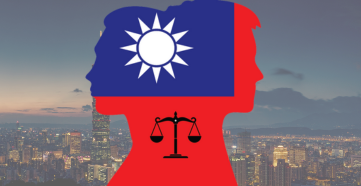
The latest research by the International Bar Association (IBA) Legal Policy & Research Unit (LPRU) into gender disparity in the law across the world is focused on Taiwan. The findings reveal that women are underrepresented at the top of the profession in…
The IBA's LPRU has published a report on the nature and prevalence of bullying and sexual harassment in the legal profession around the world, based on the findings of its extensive 2018 survey on the subject. It offers both observations and recommendations for action. The IBA hopes that the report will encourage law firms to revisit their policies and training for responding to and preventing bullying and harassment.
Apr 22, 2022
This article discusses the recent SEC case involving PwC and highlights the wider implications for intermediary institutions providing professional services in a tightened regulatory and enforcement regime in China’s banking and financial sector.
The crisis caused by the Covid-19 pandemic has renewed interest in the need for legal and contractual mechanisms that promote the adjustment of contracts in the event of unforeseeable and abnormal circumstances.
The purpose of this article is to provide an overview of the main aspects that served as a starting point for the ‘Municipal Tax Harmonisation Agreement’ in Venezuela, presented by the Vice President of the Economic Area with governors and mayors, in compliance with the mandate given to them by the Constitutional Chamber of the Supreme Court of Justice in judgment No 0078 dated 7 July 2020.
The article explores how far South Africa has come in providing protection for LGBTQIA+ individuals. South Africa has made noteworthy progressions in LGBTQIA+ rights since 1996. From prohibiting discrimination on the basis of sexual orientation in the Constitution of the Republic of South Africa, to the numerous cases in which courts have taken steps to provide protection to same-sex life partners, and the birth of the Civil Union Act, which provides for same-sex partners to get married.
Dec 02, 2021
With the rapid growth of sustainable products and investments, the pressure for genuine corporate sustainability has intensified. Increasing investor scrutiny and accelerating climate breakdown and biodiversity loss, for example, play a part in this. In-House Perspective explores whether increased awareness owes as much, however, to reactions to the rising tide of ‘greenwash’ – when corporations make misleading claims about their green credentials.
This article examines the Future Energy Scenarios set out in the National Grid ESO’s recent report, with a particular focus on the role of digitalisation and open data in achieving net zero in the UK by 2050.
Government Decree RD-Law 463/2020, dated 14 March 2020, declared a State of Emergency to deal with the Covid-19 health crisis. It adopted a series of measures relating to limiting peoples’ movements, as well as constraining Spain’s social and economic activities.
In spring 2018, the International Bar Association's Human Rights Institute (IBAHRI) and the Anti-Torture Initiative (ATI) reached the milestone of conducting tailored programmes in all five regions of Brazil on torture prevention and implementing the Istanbul Protocol. The IBAHRI has worked in Brazil since 2010 to support the country in its commitment to eradicate torture as part of its obligations under international law
May 08, 2024
In the second part of this feature, Global Insight assesses the legal issues associated with clean energy as countries pivot to renewables in response to the climate crisis.
In the second part of this feature, Global Insight assesses the legal issues associated with clean energy as countries pivot to renewables in response to the climate crisis.
Apr 23, 2025
The IBA expresses its deepest condolences on the passing of His Holiness the Pope. His unwavering commitment to justice and the dignity of all people resonated far beyond religious boundaries and inspired those in the legal profession across the globe.
May 11, 2026
An interview with the renowned international jurist
In this podcast, Nico Ooyevaar, Vice-Chair, IBA International Trade and Customs Law Committee, and partner at McMan & Co, discusses the Vision Research Europe vs Dutch Customs case with Yves Melin, Publications Officer, IBA International Trade and Customs Law Committee, and partner at Reed Smith.
In this podcast, Alvaro Castellanos Howell, Co-Chair of the IBA Poverty and Social Development Committee, talks to Hugo Beteta, Director of the Economic Commission for Latin America and the Caribbean (ECLAC). Mr Beteta discusses the impact of the Covid-19 pandemic on Latin American and Caribbean countries, the difference between poverty and inequality, and the recommendations made by ECLAC on the eradication of poverty.
In this LPRU podcast, Professor John Ruggie, the author of the UNGPs speaks to Sara Carnegie, Director of the LPRU and Maria Pia Sacco, Senior Project Lawyer, to discuss the impact of the UNGPs and future developments in the area of business and sustainability.
News release, Tuesday 12 November 2018. The International Bar Association’s Human Rights Institute (IBAHRI) has released a video on torture prevention in Brazil in which local stakeholders and international experts provide opinion about the historical background of torture in the country, and the current challenges for its prevention and prosecution. The video also illustrates how the work of the IBAHRI is contributing to strengthening Brazil’s capacity to uphold its national and international commitment
Jun 16, 2021
Ten years after the unanimous endorsement by the United Nations Human Rights Council of the UN Guiding Principles on Business and Human Rights (UNGPs), their author Professor John Ruggie (pictured) discusses the ever-changing landscape of human rights due diligence with the International Bar Association (IBA) Legal Policy & Research Unit (LPRU).
May 11, 2020
Letter to the President of Kazakhstan from IBAHRI
Dec 09, 2022
Increased economic volatility, healthcare emergencies and the rise of digital markets have all challenged the enforcement tools and approach of competition authorities globally. Successive economic shocks have required greater speed in responding and finding solutions to protect consumers. The Competition Commission of South Africa (CCSA) has used the active monitoring of critical markets, firm-level advocacy, guidance on the boundaries of acceptable conduct, accelerated investigations and consent agreements to correct behaviour rather than litigation. Examples are provided in price gouging, food markets, polymerase chain reaction (PCR) testing and airline exits. Speed is also considered important in digital markets, and given the ecosystems that characterise many digital markets, market inquiries are increasingly seen as a more effective tool to address features that adversely affect competition, along with tackling value chains in traditional markets.
Aug 09, 2022
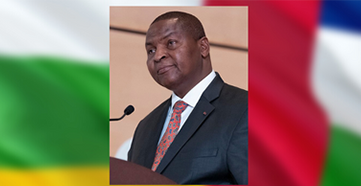
The International Bar Association’s Human Rights Institute (IBAHRI) commends the Central African Republic (CAR) and President Faustin-Archange Touadéra (pictured) for passing Law 22.011, formally eradicating the death penalty in the country following a de facto moratorium since 1981.
Apr 21, 2023
The IBAHRI condemns the conviction and 25-year prison sentence handed down to Russian journalist and opposition activist Vladimir Kara-Murza by the Moscow City Court on 17 April 2023.
May 08, 2026
Péter Magyar’s victory in the Hungarian elections in April, in which he ousted Prime Minister Viktor Orbán’s regime, is set to have swift and significant implications for the EU, Ukraine and Russia. Within the EU, it’s being seen as a significant boost to the European project. Within a week of Magyar’s party winning 141 out of 199 seats in the national parliamentary elections, officials from the European Commission visited Budapest for talks with the incoming Hungarian Prime Minister.
Apr 10, 2026
Eighteen months after the UK’s assisted dying bill was introduced to Parliament, its progress has stalled in the House of Lords.
|