|
|
The current era of technology and reachable-everywhere-and-anytime lawyers imposed its rules. This wide adoption of instant messaging in some of the Middle East jurisdictions, including the UAE, has been encouraged and regularized by legislation and court decisions that afforded validity and evidentiary weight to instant messaging and electronic communications on equal footing with conventional means of communication and written documentation.
SustainabilityFocusHumanRightsMandatory Human Rights Due Diligence (mHRDD) laws are transforming the legal landscape for business. Faced with substantive due diligence requirements, sanctions for non-compliance, and heightened scrutiny from stakeholders, companies are scrambling to understand and incorporate mHRDD into their business models and supply chains. This panel will take a practical look at what companies can do to address these binding human rights-related rules. It will cover the Who, What, Where and How of mHRDD including trending legislation across jurisdictions and emerging best practices. Special emphasis will be placed on the overlap between mHRDD and the climate emergency, as well as the impending EU human rights and environmental due diligence legislation that may require corporates due diligence laws to align with the goals of the Paris Agreement.
SUSTAINABILITY FOCUS sessions marked as such are part of the IBA Annual Conference 2022 sustainability focus on Tuesday and Thursday, grouping sessions discussing different aspects of ESG and sustainability across the different legal fields.
IBA Annual Conference Miami 2022
Apr 14, 2026
This paper assesses the evidentiary value of WhatsApp and SMS screenshots – and, by analogy, ordinary unsigned emails – in Italian civil litigation. Courts treat such communications as ‘mechanical reproductions’ under Article 2712 of the Italian Civil Code, giving them full probative effect unless their conformity is specifically disavowed. The paper summarises the impact of disavowal and the main routes to prove authenticity (verification proceedings, court-appointed forensic analysis, presumptions, and witness evidence), and briefly discusses their use to support applications for payment orders and, in stricter cases, provisionally enforceable injunctions.
Providing compensation can encourage reporting by individuals of misconduct or compliance deficiencies and can demonstrate a company’s commitment to uncovering and remediating such issues. Compensating whistleblowers may also provide a financial cushion to whistleblowers in the face of potential risks of retaliation. On the other hand, could compensating whistleblowers undermine a company’s efforts to provide a “speak up culture” or risk leading to a surfeit of meritless or frivolous complaints? This panel will discuss the benefits and disadvantages of structuring a program to incentivize reporting corporate misconduct through financial rewards and other incentives.
8th Annual Corporate Governance Conference
Jun 12, 2024
The new Foreign State Immunity Law 2023 of the People’s Republic of China came into force on 1 January 2024. This shifts the country (as well as its special administrative regions, Hong Kong and Macau) away from absolute state immunity to restrictive state immunity, bringing it more in line with the relatively prevalent practice among the international community. This article discusses the status of state immunity in public international law, analyses the new law’s provisions and examines practical challenges that will be faced by those seeking to utilise this law to enforce judgments or awards against foreign states and state entities, and the new law’s innovations that go beyond the United Nations Convention on Jurisdictional Immunities of States and Their Property of 2004 and the UK State Immunity Act 1978.
Entrepreneurs today have a global mindset. Entrepreneurs need investors who have a holistic vision of the market and a large network of other investors; they can help build a talent base and develop collaborative relationships based on trust. Entrepreneurs transfer the majority of economic activity to the investor country. But countries are also putting up both transactional and ecosystem barriers. How do investors and startups deal with the legal and cultural challenges they encounter. We will talk with investors and entrepreneurs and practitioners how to navigate the regulatory, compliance and cultural challenges in their quest for growth.
8th Global Entrepreneurship Conference

Jul 08, 2025
Mediation is on the rise internationally as a means to settle disputes in a cost-effective manner. Chinese parties appear to be increasingly interested in mediation as an option. This article examines the evolving landscape of mediation in China and internationally. It considers how mediation for Chinese parties is evolving and whether mediation is a good option for Chinese parties in cross-border disputes. Commercial mediation has seen remarkable growth, bolstered by a supportive PRC judicial system and legislative initiatives encouraging parties to find harmonious ways to resolve disputes. The article analyses the three primary types of mediation in China: people’s mediation, administrative mediation, and commercial mediation. It also looks at mediation rules and proceedings in common law jurisdictions, such as Hong Kong, Singapore, and the United States. The article anecdotally considers the cultural elements, emphasising the Chinese parties’ preference for evaluative mediation styles as a reflection of civil law. Through case studies of international disputes involving Chinese and US parties, the article illustrates the practical dynamics of mediation involving Chinese parties and underscores the importance of cultural sensitivity in international mediation. As Chinese parties continue to go global, mediation is emerging as an attractive option for efficient and cost-effective dispute resolution. This analysis assesses whether the promotion of mediation is yielding tangible outcomes and explores the future of mediation involving Chinese and foreign parties.
SustainabilityFocusThe role of corporations in being part of both the problem and the solution of climate change and sustainability has never been more pronounced. Pressure from activist investors and financial institutions are holding companies increasingly accountable for their environmental, social and governance (ESG) performance. Governments, activists, and customers are focused on corporate contributions to climate change and the adequacy of efforts to address emissions through various net-zero commitments. This is creating legal issues for boards, corporate leadership and governance, and the courts as these issues move from advocacy and policy to regulations, liability, and litigation. This showcase panel will focus on the growing intersection between the climate change and ESG movements and the role of the lawyer in advising clients to prepare for and mitigate legal risks through corporate governance in the wake of growing regulatory and stakeholder pressures, and preparing to address them when issues translate to litigation and liability.
SUSTAINABILITY FOCUS sessions marked as such are part of the IBA Annual Conference 2022 sustainability focus on Tuesday and Thursday, grouping sessions discussing different aspects of ESG and sustainability across the different legal fields.
IBA Annual Conference Miami 2022
The chaos caused by what police believe was a lone man’s killing of four people near Westminster in London has once again stirred the debate on the boundaries of the law and the remit of government bodies intended to prevent terror attacks.
At the centre of the debate is messenger service WhatsApp, which the attacker is thought to have used minutes before driving a car onto the busy pedestrian lane on Westminster Bridge.
Part 1: Simulation
Participants will be seated at round tables and divided into two negotiation teams. Each team will receive confidential briefing materials outlining their respective positions, interests, and potential solutions. After reviewing the instructions and preparing their strategy, teams will engage in live negotiations with their counterparts. The outcomes of each negotiation will be documented and submitted to the moderator.
Part 2: Debrief and discussion
The moderator will reveal the results of each table’s negotiation. Participants will then reflect on their experience, share insights, and discuss key takeaways about negotiation styles, tactics, and outcomes.
10th Global Entrepreneurship Conference: Legal Challenges in Closely Held Businesses: Strategies for Success and Sustainability
Apr 22, 2022
This article discusses the recent SEC case involving PwC and highlights the wider implications for intermediary institutions providing professional services in a tightened regulatory and enforcement regime in China’s banking and financial sector.
Delegates will work in roundtable groups to discuss selected corporate governance and M&A topics which are particularly relevant for small and family-owned businesses, and which will be debated interactively:
1.Cross-Border M&A: Key regulatory hurdles, such as foreign direct investment (FDI) restrictions and national security concerns - cultural and legal due diligence in cross-border M&A deals, how cultural differences, local laws, and business practices can impact the success of a transaction.
2.AI & Technology in M&A transactions: AI-driven due diligence: Risks, opportunities, and future trends; how AI is transforming due diligence, contract analysis, and risk assessment.
3.ESG Integration in M&A Transactions: can integrating ESG criteria into the acquisition strategy enhance long-term value and reduce potential liabilities? how ESG performance impacts deal valuation and integration?
4.Negotiation tactics in M&A deals: Sharing successful strategies and techniques for negotiating favourable terms during M&A transactions.
5.The importance of diversity on corporate boards: Examining how diversity in leadership roles contributes to better governance outcomes.
6.Governance challenges in family businesses: Exploring the unique governance issues faced by family-owned enterprises and strategies for addressing them.
7.Private equity and family-owned businesses: recent trends of private equity firms partnering with family-owned businesses to drive growth, implement succession plans, and prepare for generational transitions and strategies to balance investor influence with the company’s existing structure and values.
8.Corporate governance in crisis management: How companies can prepare and respond to crises with strong governance frameworks.
9th Global Entrepreneurship Conference
Sep 14, 2023
After several boom years, culminating in record M&A activity in 2022, there’s been a significant downturn in 2023. Global Insight assesses the causes and what’ll happen next.
Recent actions, including the European Commission notifying Meta of possible interim measures being used to address the exclusion of third-party AI assistants from WhatsApp, signal a willingness to intervene early to prevent irreparable competitive harm.
30th Annual Competition Conference
The March 2019 Brexit negotiation deadline gets ever closer and, after hours of fierce debate in the UK Parliament, the European Union Withdrawal Bill was finally enacted on 26 June. But the passing of the Sanctions and Anti-Money Laundering Bill on 23 May is likely to have a more immediate impact on the City of London as the UK faces international diplomatic pressure to adopt a more combative approach, particularly towards Russia.
Tour details
• Date: 5 June 2026
• Pick-up time and location:1630 (near Lisbon historic city centre)
• Duration: Approximately 2 hours
• Price: €35 per person (VAT included)
• Booking deadline: 26 May 2026
How to book
Please contact Tuk Guide Portugal directly:
• Email: reservas@tukguideportugal.pt
• WhatsApp: +351 919 920 000
When booking, please quote the following booking reference and also provide the details below:
• Booking reference: IBA05062026
• Full name
• Contact phone number
• Address and preferred pick-up location
The tour company will then send payment instructions directly to you.
12th Annual IBA World Life Sciences Conference
Nov 17, 2022
This session, led by the IBA Legal Practice Division and the Energy, Environment, Natural Resources and Infrastructure Law Section (SEERIL), addressed the role of lawyers in the intersection of climate change, sustainability and corporate governance.
IBA Annual Conference Paris 2023
Feb 12, 2019
Business and investors need to play a huge role in financing the UN’s Sustainable Development Goals over the next decade but, three years into the journey, progress is proving slow. Global Insight explores the challenges facing companies and legal practitioners in closing the gap between ambition and action.
Mar 01, 2013
The Kiobel case at the US Supreme Court has put the issue of corporate liability for human rights abuses firmly in the spotlight. IBA Global Insight assesses whether businesses and law firms are doing enough to meet their obligations.
Interview with Rae Lindsay of Clifford Chance and Yasmin Batliwala of A4ID (Advocates for International Development), a global charity committed to ensuring legal support is available for those involved in the fight against poverty.
In this interview, they discuss the United Nations Guiding Principles on Business and Human Rights and how they may apply to the legal world.
Mar 29, 2023
The role of corporations in being part of both the problem and the solution of the climate crisis and sustainability has never been more pronounced.
Podcast: A look at how in-house counsel can navigate the evolving and increasingly fragmented legal framework regarding business and human rights and ESG, and how lawyers can support companies in their journey towards sustainability.
Jan 09, 2024
This article reviews the recent European Union regulations, namely the Digital Services Act and the Digital Markets Act which regulate digital platforms with operations in Europe, from different perspectives. Likewise, the article revises some regulatory projects in Brazil and the United States, before turning to Argentina, where the regulation of the intermediaries’ responsibility is an issue of current relevance. Due to the lack of an ex-ante regulation regarding these topics, this article goes over some of the cases treated with consumer protection regulations as well as with antitrust law and data privacy provisions.
Feb 22, 2021
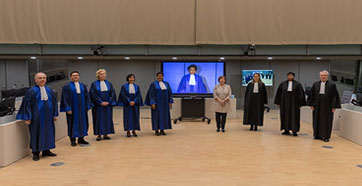
The International Bar Association (IBA) welcomes the election of Karim Khan QC as the next Prosecutor of the International Criminal Court (ICC) and six judges, as well as the new president, vice presidents and members of the Bureau of the Assembly of States Parties (ASP) – the Court's management oversight and legislative body, composed of...
IBA Global Insight Aug/Sept 2018. Kim Jong-un’s recent summit with President Trump has raised the prospect of North Korea opening up to foreign investment. Global Insight considers an emerging market like no other.
Like many countries around the world, Nigeria was forced to impose a lockdown in Lagos (Nigeria’s commercial hub) and Abuja (Nigeria’s capital city) to combat the spread of Covid-19. The government’s ban on public gatherings and interstate travel resulted in the judiciary’s suspension of court sittings from March to May 2020, except for hearings of cases that were considered urgent, essential or time-bound.
Jun 09, 2025
The rise of artificial intelligence (AI), particularly generative AI, has captured the attention of legal and compliance professionals. Unlike generative AI, which primarily focuses on content creation, agentic AI ‘does’ rather than merely ‘creates’. This evolution signifies a shift from content generation to task execution and problem-solving, and holds great implications for compliance, where many tasks involve complex workflows and big data analysis that transcend simple content generation.
The landscape for potential human rights abuses by digital surveillance is changing as the methods used grow ever more powerful. Global Insight considers this evolution and the need for regulatory frameworks to adapt.

Dec 21, 2023
India is increasingly becoming a key jurisdiction for foreign investment. To keep the momentum going, the Indian government has consistently attempted to keep the business environment friendly and less burdensome. This includes: a reduction in corporate tax rates; easing the liquidity problems of non-banking financial corporations and banks; foreign direct investment policy reforms; and easing compliance norms – all with the aim of promoting ‘ease of doing business in India’. After more than a decade, India’s competition law has recently been amended, bringing about key changes that will impact businesses. The 2023 Amendments to the Indian Competition Act 2002 (the Act) introduce changes that several antitrust jurisdictions are still considering. The 2023 Amendments are a mixed bag of changes: several are business friendly – such as commitments and settlements, expedited merger review timelines and introducing a leniency-plus regime – while others aim to achieve greater regulatory oversight and stricter enforcement, such as deal value thresholds, penalties on global turnover and increased liability for hubs in ‘hub-and-spoke’ cartels. The Competition Commission of India (CCI), the body entrusted with the responsibility to nurture and maintain well-functioning markets that facilitate the growth manifested by the Indian government, must adopt a balanced approach to ensure that competition enforcement does not get in the way of ‘economic growth’ as envisaged under the Preamble of the Act. This article examines the impact of the 2023 Amendments on the Indian market. In particular, the writers examine the CCI’s approach in adopting these tools and tailor it according to the requirements of the Indian economy.
Aug 20, 2024
With regulators around the world stepping up their focus on off-channel communications, all businesses must ensure they’ve appropriate policies and procedures in place, as In-House Perspective reports.
Jan 23, 2023
Last autumn, US antitrust agencies blocked a proposed deal between two major book publishers. Global Insight examines the case in the context of the activist approach being taken by regulators, especially towards Big Tech.
The approach currently adopted by competition authorities around the world against so-called big tech hides two main risks, namely the delay in respect of innovation processes that may cause the actions undertaken turn out to be vain and the antitrust over-enforcement. This second feature, particularly, is strictly related to the position that enforcers are prone to adopt on competition law goals, which debate has massively re-emerged in the present context
The continued proliferation of disinformation online – often referred to as ‘fake news’ – has this summer led to increased scrutiny and action from governments.
May 04, 2026
Recent Italian case law decisions spanned from considering the impact of increasingly digital workplaces on trade union rights to re-examining traditional union representation and recognition principles. In two 2026 decisions the Court of Cassation clarified that digital consultation methods may satisfy statutory obligations, provided that substantive participation is preserved. Together, these rulings reflect a consistent judicial approach: procedural forms may evolve, but the core functions of representation and collective negotiation must remain intact. Running in parallel, the Constitutional Court’s October 2025 ruling on Article 19 of the Workers’ Statute reshaped the criteria for workplace union recognition by rejecting exclusive dependence on company‑level bargaining participation as the sole gateway to RSA status and grounding representation rights in objective measures of union national representativeness.
Jun 01, 2024
As companies seek to demonstrate the steps they’re taking to tackle abuses, such as modern slavery and discrimination, a standalone human right policy may have advantages. In-House Perspective explores what companies must consider and the role of in-house lawyers in such policies.
Jun 22, 2022
This article considers Pakistan’s crackdown on social media giants such as Facebook, Twitter and TikTok, and the relationship between these restrictions and the right to freedom of expression.
Oct 12, 2021
In this article we look at the growth of data breach class actions in the UK and Europe following the coming into force of the General Data Protection Regulation (GDPR). We also consider regulatory activity in the data protection field and the links between investigations and recent class actions. Looking to the future we ask whether current trends are likely to continue, highlighting some powerful policy statements made by the English Court of Appeal in support of data breach class actions, and conclude with a few words on litigation funding and its role in facilitating these kinds of cases.
Aug 07, 2018
IBA Global Insight Aug/Sept 2018. While it’s been a favoured destination for affluent Russians and their wealth for some time, Global Insight assesses the sudden and growing pressure to keep this source of dirty money out of the City.
|