|
|
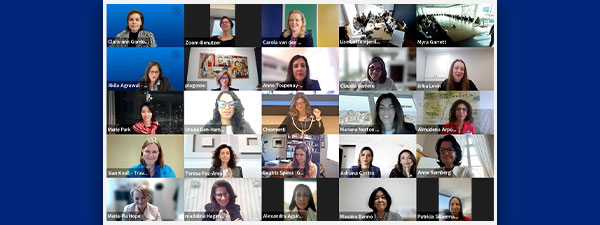
'Thirty leading lawyers from all over the world came together virtually to celebrate the inaugural IBA Women’s Day on 8 March – International Women's Day. Many in-person discussions were also held in conjunction with the virtual event, aiming to inspire and guide the younger generation of female practitioners. Of course, our Association was already dedicating significant efforts to promoting gender equality, especially in the legal sector.
Seed capital, convertible instruments, safes, carried interest – where are we now?
IBA Annual Conference Mexico City 2024
The Agriculture and Food Section (AFS) focuses on the evolving intersection of agricultural and food law and policy. Addressing urgent issues such as equitable food production in the face of climate change, land use, food production and distribution, farmers’ rights, seed and biotechnology laws, food safety, and agri-tech. We also explore sustainable agricultural practices and investment strategies. As a dynamic and essential field, the AFS provides a platform to address critical legal challenges in feeding the planet effectively and sustainably.
Mar 31, 2022
Commonly, simple agreements for future equity (SAFEs) are based on post-money valuation. Since their introduction, the SAFE has been used by many startups, particularly in the US. In Austria, using SAFEs as an instrument for early-stage financing is still quite novel. Therefore, the Austrian startup-finance ecosystem does not yet have standard form documents.
A mega-merger between two of the world’s largest agrochemical companies has been given the go ahead by the European Commission and the United States Department of Justice, prompting fresh warnings over lack of competition in global agricultural markets and the impact on food production.
New gene-editing technologies can help to overcome challenges in sustainable food supply. These biotechnologies enable agricultural professionals to meet an ever-growing demand for food. However, understanding of their impact is incomplete, the data required for risk assessment is only partially available and there are ethical and societal concerns. Legal systems vary between prohibition, case-to-case product risk analysis and systems based on a precautionary principle.
Apr 12, 2023
Pakistan, as a member of the World Trade Organization (WTO) and a signatory to the Agreement on Trade-Related Aspects of Intellectual Property Rights (‘TRIPS Agreement’), is obligated to protect new plant varieties under article 27.3(b) of the TRIPS Agreement.
Jun 11, 2023
In 2012, the first ad-hoc regulation for startups was introduced in Italy. That regulation facilitated growth of the Italian venture capital (VC) market by providing tax and corporate incentives for the setup and funding of startups.
Feb 10, 2025
In 2022, a Brazilian startup filed a lawsuit seeking the adjudication of its right to cultivate hemp and market its parts in Brazil for medicinal and industrial uses. The Superior Court of Justice (STJ) ruled in November 2024 that hemp with low THC levels cannot be considered proscribed under Brazilian law, allowing its economic exploitation for medicinal and pharmaceutical purposes. This decision mandates ANVISA to establish regulations within six months. The ruling is unprecedented, differentiating hemp from psychoactive cannabis, and emphasising the need for public policies to manage cannabis varieties.

Sep 23, 2022
Simple agreements for future equity (SAFEs) are financing instruments that may be used to raise capital in seed financing rounds. Generally, such financing instruments are viewed as a more founder-friendly alternative to convertible notes on an international level. A SAFE is an investment agreement that gives the investor the right to receive equity of the company under certain circumstances. In 2013, the American startup accelerator Y Combinator introduced the first SAFE, which was based on a pre-money valuation. However, in 2018, Y Combinator amended the form of the SAFE to be based on a post-money valuation. SAFEs or SAFE-like instruments are used in many jurisdictions, such as Austria, Germany, Italy, Norway, Sweden and the United Kingdom. However, this article describes the most relevant aspects of SAFEs from a United States, UK, Austrian and Swedish law perspective. Further, it elaborates on the most frequently used types of seed financing instruments as an alternative to SAFEs in the relevant jurisdictions, including convertible notes (also referred to as convertible promissory notes or convertible loans).
Dec 11, 2025
AI-native law firms represent fundamental restructuring enabled by multiple factors, with specific examples and the key finding (massive cost reductions) culminating in the existential challenge to traditional models.
Sep 26, 2023
Venture debt, a different funding alternative for startups, has positioned itself firmly in the venture business in the past few years, reaching high numbers in the US market by 2022, and more recently has begun to gain position in other markets, such as Latin America. This type of financing seems counterintuitive at first, since the logic behind loan financing has not aligned traditionally with the high-risk profile and low cash flows of startups. This has led to burdensome requirements for its founders, who have had to back up the loans personally, but the empirical data seems to point towards a significant use and growth of this type of financing. This article looks at how venture debt works and why it works.
Jun 02, 2025
Uruguay is integrating hemp-derived products into its food industry, which requires a clear legal framework to regulate its use that also fosters growth of the industry. The sector faces regulatory uncertainty, especially concerning tetrahydrocannabinol (THC) limits, food safety standards and export restrictions. While global demand for hemp-based superfoods is rising, national legislation remains fragmented. Companies like Goland are expanding their operations, but require harmonised regulations for sustainable development. Key measures include regulatory alignment, certification systems, public–private collaboration and consumer education. Addressing these gaps will position Uruguay as a leader in the hemp-based food market, while ensuring safety and compliance.
Jul 02, 2021
The social and financial impact of Covid-19 has led to one of the biggest shake-ups the not-for-profit sector has seen in decades. As the pandemic continues to raise a plethora of challenges, general counsel are finding innovative ways to ensure vulnerable communities get the support they so desperately need. Ruth Green reports.
Jan 21, 2022
The pandemic exacerbated pre-existing inequalities facing Indigenous peoples worldwide, but COP26 brought them centre stage. Global Insight looks at the pressing need to make Indigenous voices part of the solution.
In-House Perspective March 2020, Profile - Katherine Meighan
Sep 23, 2022
It seems almost overnight that global news was flooded with talk of blockchain and non-fungible tokens (NFTs). The barrage of such information has both confused and captivated the world, leading many to still wonder what an NFT is, while inspiring others to apply this technology to advance their industry or industry sector, with one such industry sector being health data. Specifically, this article explores the use of NFTs to store health data. Much of this article may be applicable to the use of NFTs to store any type of data, but it focuses on health data, highlighting some of the significant opportunities and challenges in this space. It also provides critical analysis to demonstrate how businesses should begin to analyse their work in the NFT space under existing regulations. This article first demystifies blockchain and NFTs by explaining what they are. Second, it explores the use of NFTs to store health data, and some of the opportunities presented by this use. Third, the article highlights some of the legal and ethical gaps surrounding the use of blockchain to store health data, with a specific focus on individual privacy and privacy rights. This is accomplished through an analysis of a variety of global privacy laws and their application to NFTs, specifically when used to store health data. The article concludes with a discussion of some ethical concerns related to the use of NFTs to store health data.
Oct 21, 2022
Uruguay was probably one of the first countries in the world to regulate cannabis production for recreational, medical and industrial use (Law No. 19.172, 20 December 2013 (the ‘Law’). The Law established the legal framework for state-control and regulation of the import, export, planting, growing, harvesting, production, acquisition, storage, marketing, distribution and use of cannabis and its derivatives.
In the United States, crowdfunding has evolved over the last five years to refer to several different funding approaches, including donation-based funding that is not a securities offering, and securities offered to anyone, including retail investors, pursuant to the criteria provided in the safe harbour rule ‘Regulation Crowdfunding’.
This is a broad topic and this article focuses only on retail crowdfunding pursuant to Regulation Crowdfunding.
Aug 17, 2022
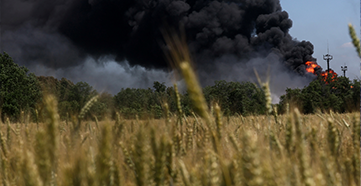
Ukraine and Russia signed the Black Sea Grain Initiative in late July, aiming to restart the resumption of grain exports from Ukraine via the Black Sea after months of delay.
Jul 21, 2022
Despite all of the difficulties, in the last two years the Brazilian equity crowdfunding ecosystem has exceeded all expectations and proved its maturity. Perceiving the growth potential of this market, the Brazilian Securities and Exchange Commission has issued a set of updates to the equity crowdfunding regulation, which will be addressed in this article.
Jul 22, 2022
The Ukraine–Russia war has exacerbated problems with food security as both sides are major contributors to global supply lines. Global Insight assesses whether we’re living in a food crisis and, if so, what can be done.
Dec 03, 2025
Regulations on medicinal cannabis in Argentina have evolved significantly over the past eight years; however, market development remains limited. This article examines the key factors influencing the current regulatory landscape, with a particular focus on medicinal use and product liability, which is essential to ensuring the safe and responsible use of cannabis.
Aug 16, 2023
This competition gathers ten meaningful stories about our experiences as international arbitrators in a unique compendium, available for download.
Since the introduction of the variable capital company (VCC) framework in Singapore in January 2020, there have been close to 160 VCCs established as of the end of October 2020. The strong take-up in a relatively short period of time against the backdrop of the Covid-19 pandemic has been encouraging and bodes well for Singapore’s push to be an asset management and fund domiciliation hub.
IBA Global Insight, Aug/Sept 2016 - Recent polling in America and references by presidential candidates have put the murky issue of torture firmly back on the agenda. A pioneering project being undertaken by Harvard University’s Carr Centre for Human Rights Policy and the IBA is examining the impact of US torture policies on relations with the UK
Jun 09, 2021
The Indian government has passed controversial farming laws triggering strikes and protests by more than 250 million workers. These historic levels of unrest have continued even as Covid-19 ravages the country.
Jul 27, 2023
A conference report on the ‘Venture capital investments in Legal Tech and the technology industry’ session from the Biennial IBA Latin American Regional Forum Conference: Technology, social media and artificial intelligence: challenges for the legal industry in the digital age.
Aug 11, 2024
The session focused on the expansion strategies of companies through acquisitions and alliances, emphasising the strategic and legal aspects that influence growth. It covered the motivations behind inorganic growth, such as increasing production capacity, accessing new markets and acquiring strategic assets. Trends in investment jurisdictions and sectors, including the impact of geopolitics, were examined. The discussion also highlighted the importance of cultural understanding and local legal expertise in managing cross-border transactions. The role of foreign direct investment (FDI) restrictions and how companies navigate these challenges was also addressed. Overall, the session provided insights into the complexities of inorganic growth and the factors that companies must consider when pursuing such strategies.
Dec 04, 2025
Peru’s regulatory landscape for cannabis and hemp is evolving rapidly. The country has made considerable progress in the development of marketing authorisation categories and compounding, facilitating access to medicinal cannabis. The recent enactment of Law No. 32195 introduces a legal framework for industrial hemp, paving the way for its use in cosmetics and food. This article explores the positive regulatory developments and the anticipated impact of the upcoming regulation, highlighting Peru’s alignment with international standards and its potential for industrial innovation.
Sep 12, 2024
This article presents Bernardo Cremades' reflection on the profound implications of the discussions that took place during the 2002 International Arbitration Day in Brussels, an event over which the author presided. It specifically focuses on the repercussions these discussions have had on the legal landscape of corporate arbitration.
|